





What's Happening?
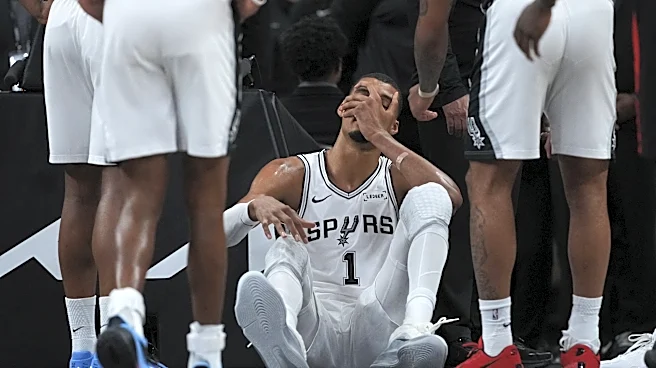
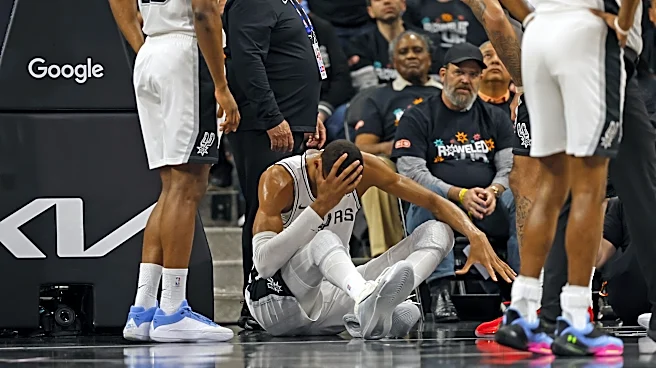
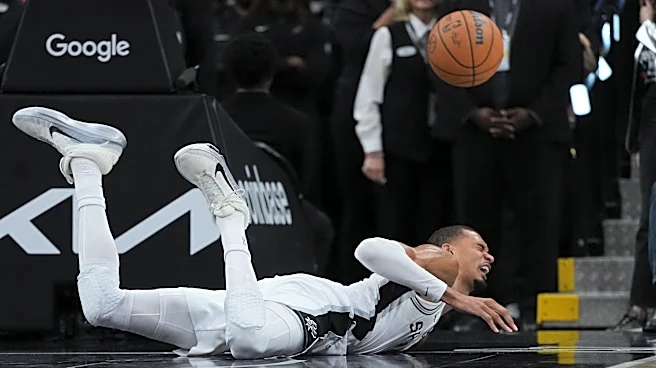
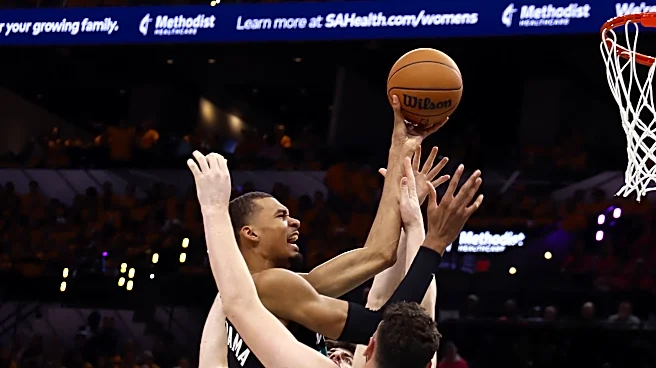
Victor Wembanyama, a 22-year-old center for the San Antonio Spurs, suffered a concussion during Game 2 of the Western Conference first round against the Portland Trail Blazers. Neuroscientist Chris Nowinski, a leading advocate for brain safety, described
the injury as serious, noting Wembanyama's slow recovery and loss of balance as signs of neurological impairment. The NBA's concussion protocol requires a minimum 48-hour rest period and passing cognitive tests before a player can return to play. Wembanyama's status for Game 3 remains uncertain, as he must clear these protocols. The Spurs are currently tied 1-1 in the series, and Wembanyama's potential return is a significant concern for fans and the team.
Why It's Important?
The handling of Wembanyama's concussion highlights ongoing concerns about player safety in professional sports. The NBA's concussion protocol, which mandates a 48-hour rest period, is designed to prevent premature returns that could lead to further injury. However, Nowinski points out that this timeframe may not align with the latest neurological science, potentially putting players at risk. The situation underscores the tension between competitive pressures and long-term health considerations for athletes. The outcome of Wembanyama's recovery could influence future discussions on concussion management in the NBA and other sports leagues.
What's Next?
Wembanyama's ability to play in Game 3 depends on his recovery and passing the NBA's concussion protocol. The Spurs' medical staff will conduct cognitive tests to assess his readiness. If cleared, Wembanyama could return to the court, but there is a risk of further injury if he is not fully recovered. The Spurs must balance the desire to win the series with the need to protect their player's long-term health. The situation may prompt the NBA to reevaluate its concussion protocols to better align with scientific understanding and ensure player safety.
Beyond the Headlines
The incident raises broader questions about the ethical responsibilities of sports organizations to protect their athletes. The potential for long-term health issues from repeated concussions is a significant concern, and the NBA's current protocols may not fully address these risks. The league's approach to concussion management could face scrutiny, leading to potential changes in policy. Additionally, the case highlights the importance of educating players about the risks of returning to play too soon and the need for comprehensive support systems to ensure their well-being.