






What's Happening?
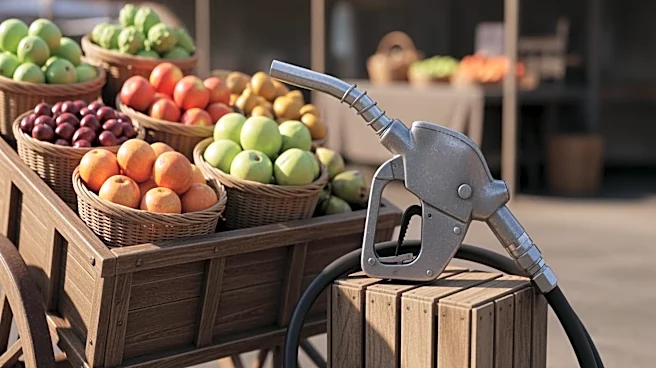
Farmers market vendors in Southern California are experiencing significant financial strain due to rising gas prices. Zenaida Quintero Sanchez, owner of Sanchez Farms, reports that the cost of transporting produce has increased from $100 to $140 per trip,
as gas prices have surged from $3.98 to $5.97 per gallon. This increase in transportation costs has led to a $1 rise in the price of each basket of strawberries and other berries sold by the farm. Additionally, the cost of plastic baggies and baskets has risen by 5 to 10 cents per unit, further impacting the overall expenses for vendors. Despite these challenges, Sanchez Farms has maintained customer loyalty, with only marginal sales losses, as customers continue to value the quality of their produce.
Why It's Important?
The increase in gas prices is not only affecting large industries but also small businesses like farmers market vendors, highlighting the widespread economic impact of fuel costs. For vendors like Sanchez Farms, the rising costs of transportation and materials are forcing them to adjust their pricing strategies, which could lead to higher prices for consumers. This situation underscores the vulnerability of small businesses to fluctuations in fuel prices and the potential for these costs to be passed on to consumers. The loyalty of customers to Sanchez Farms suggests that quality can mitigate some of the negative impacts of price increases, but sustained high fuel prices could challenge this dynamic.
What's Next?
If gas prices continue to rise, farmers market vendors may need to explore additional cost-saving measures or alternative transportation methods to manage expenses. There could also be increased pressure on vendors to find ways to absorb costs without significantly raising prices, to maintain customer loyalty. Additionally, the broader economic implications of sustained high fuel prices could lead to policy discussions on energy costs and support for small businesses facing these challenges.