





What's Happening?
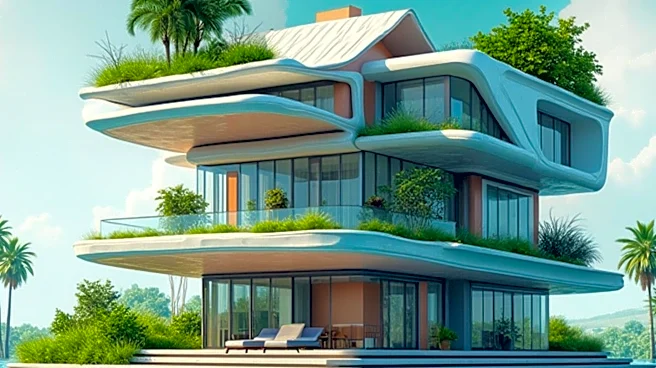
Miami's midcentury 'Jetsons' House, designed by architect Rufus Nims in 1949, has been renovated and is now on the market for $6.25 million. The house, also known as SkyFin, was reimagined by architect Gabriela L. Liebert, who preserved its historical
elements while updating it for modern living. The renovation included enclosing the ground floor to create additional living space and designing a new wing for the primary suite. The house features a futuristic design inspired by the 1960s TV series 'The Jetsons' and America's space-age Googie architecture. It includes five bedrooms, six bathrooms, and over 2,100 square feet of terraces and rooftop space.
Why It's Important?
The renovation of the 'Jetsons' House highlights the growing trend of preserving and modernizing midcentury architecture. This approach not only maintains the cultural and historical significance of such properties but also enhances their functionality for contemporary living. The project reflects a broader movement in real estate to blend historical preservation with modern design, appealing to buyers who value both heritage and innovation. The successful transformation of this iconic property could inspire similar projects, contributing to the revitalization of historic neighborhoods and increasing property values.
What's Next?
As interest in midcentury architecture continues to grow, more properties may undergo similar renovations, combining historical preservation with modern amenities. This trend could lead to increased demand for architects and designers specializing in such projects, as well as a rise in property values in neighborhoods with a high concentration of midcentury homes. Additionally, the success of the 'Jetsons' House renovation may encourage developers to invest in other historic properties, further promoting the preservation of architectural heritage.
Beyond the Headlines
The renovation of the 'Jetsons' House underscores the importance of architectural preservation in maintaining cultural identity and heritage. By updating historical properties for modern use, architects and developers can ensure that these structures remain relevant and functional, while also preserving their historical significance. This approach not only benefits the real estate market but also enriches the cultural landscape, providing future generations with a tangible connection to the past. The project also highlights the potential for architecture to serve as a bridge between history and modernity, fostering a deeper appreciation for design and innovation.