





What's Happening?
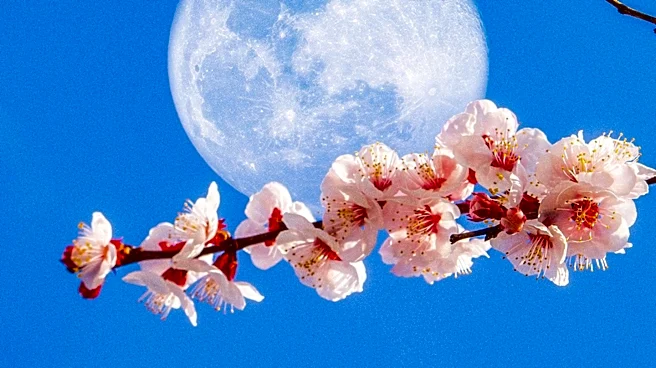
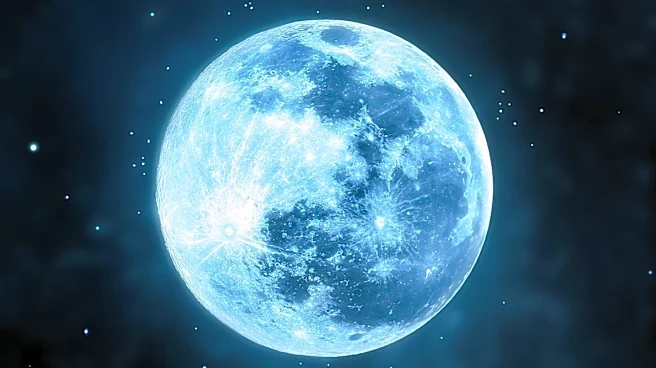
May 2026 is witnessing a rare astronomical event with two full moons occurring within the same month. The first full moon, known as the Flower Moon, reached its peak brightness on May 1. The second full moon, occurring on May 31, is termed a blue moon, a phenomenon
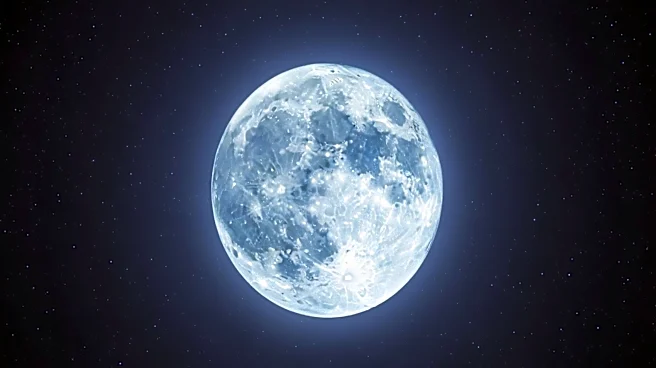
that happens when two full moons appear in a single calendar month. This event is a result of the moon's 29.5-day cycle, which occasionally allows for two full moons in one month. Both moons in May are micromoons, appearing smaller and less bright due to their position at apogee, the farthest point from Earth in their orbit.
Why It's Important?
The occurrence of a blue moon is a rare event that captures public interest and highlights the intricacies of lunar cycles. It serves as a reminder of the natural phenomena that can be observed without special equipment, fostering public interest in astronomy. The event also enriches cultural references, as the phrase 'once in a blue moon' is often used to describe rare occurrences. This particular blue moon is part of a cycle that repeats approximately every 29 months, with the next expected in December 2028.
What's Next?
Following this blue moon, the next similar event is anticipated in December 2028. Additionally, a seasonal blue moon, which occurs when there are four full moons in a season instead of the usual three, is expected in May 2027. These events continue to provide opportunities for public engagement with astronomy and for educational institutions to promote interest in the sciences.