


What's Happening?
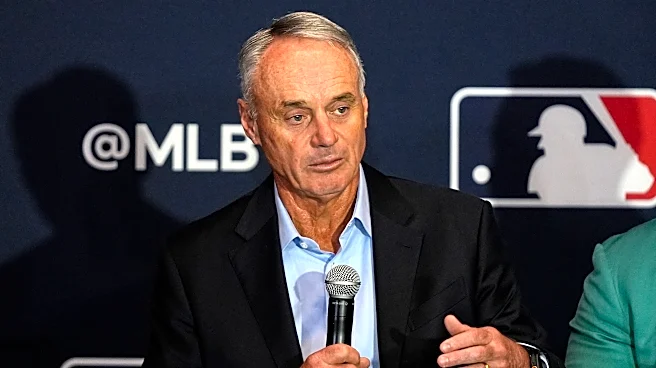
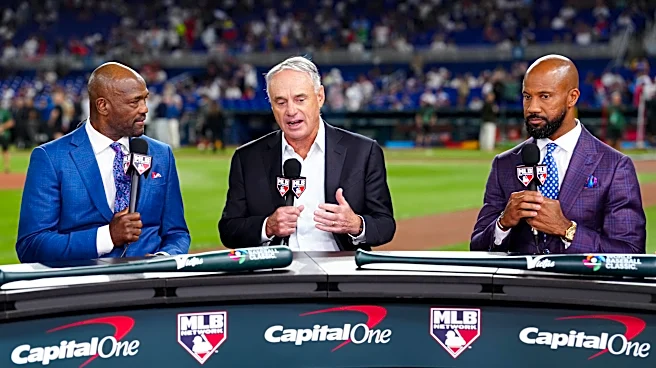
Major League Baseball (MLB) officials have proposed a hard salary cap as part of the upcoming collective bargaining agreement negotiations with the MLB Players Association. The proposed cap would set team salary ceilings at $245.3 million and a floor
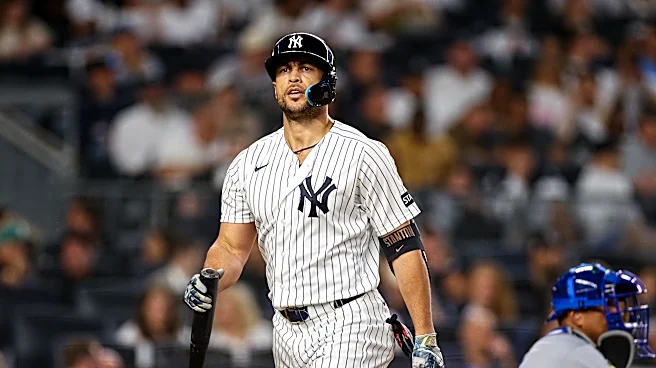
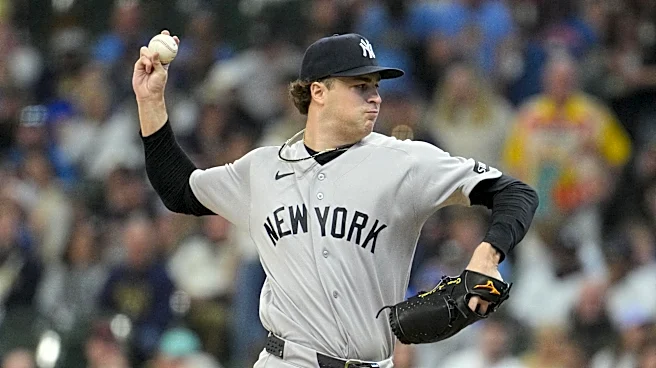
at $171.2 million. The New York Yankees, currently ranked third in MLB salary at $291.9 million, could be significantly affected by this change. The Yankees have historically leveraged their large media market to generate additional revenue, allowing them to offer substantial player contracts. Despite this financial advantage, the team has not won a World Series since 2009. The proposal comes as MLB remains the only major U.S. professional league without a salary cap, a point of contention that previously led to the 1994-95 players' strike.
Why It's Important?
The introduction of a salary cap in MLB could have far-reaching implications for team dynamics and competitive balance. For the Yankees, a cap could limit their ability to maintain high payrolls and retain top talent, potentially affecting their competitiveness. The proposal also aims to address the disparity in payrolls between major-market teams like the Yankees and smaller-market teams. If implemented, the cap could lead to a more level playing field, but it may also face resistance from the players' union, which has historically opposed salary caps. The outcome of these negotiations could reshape financial strategies across the league and influence future player contracts.
What's Next?
Negotiations between MLB and the players' union are expected to continue as the current collective bargaining agreement nears expiration. The discussions will likely address the proposed salary cap and other financial structures within the league. Stakeholders, including team owners, players, and fans, will be closely monitoring the talks, as the outcome could lead to significant changes in how teams manage their finances and build their rosters. The potential for another work stoppage looms if an agreement cannot be reached, echoing past labor disputes in the sport.