

What's Happening?
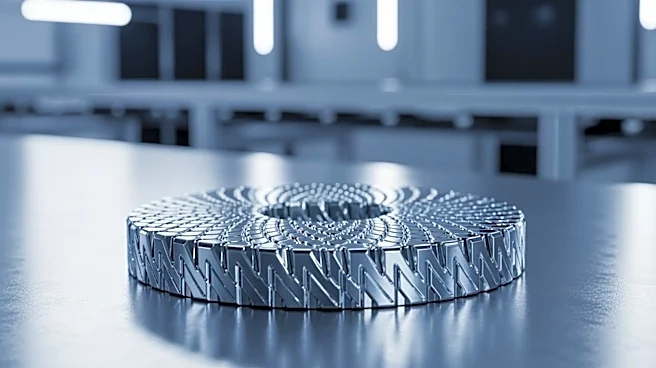
USA Rare Earth has commenced operations at its new magnet production facility in Stillwater, Oklahoma. This facility marks a significant milestone in domestic manufacturing, aiming to reduce reliance on foreign sources for rare earth magnets, which are crucial
for defense and aerospace applications. The facility, spanning 309,000 square feet, represents a $50 million investment and is equipped to produce high-grade sintered NdFeB magnets. Initial production capacity is projected at 600 metric tons annually, with plans to expand to 1,200 metric tons by early 2027. The facility's strategic approach involves acquiring manufacturing capabilities first and securing raw materials through the Round Top project in Texas.
Why It's Important?
The opening of this facility is a critical step towards reducing the U.S.'s dependency on China, which currently controls a significant portion of global rare earth magnet production. This development is particularly important for defense contractors and aerospace manufacturers who require magnets that meet stringent specifications. The facility's operations are supported by the CHIPS and Science Act, which allocates over $270 million for rare earth processing capabilities. This initiative is expected to enhance supply chain transparency and security, crucial for military applications. Additionally, the facility's production will support the growing demand for magnets in renewable energy and electric vehicle sectors.
What's Next?
USA Rare Earth plans to expand its production capacity significantly, aiming for 10,000 tons annually with full metallization capabilities. The company is also working on integrating its supply chain from raw materials to finished magnets, which would provide unprecedented control over production processes. This vertical integration is expected to reduce transportation costs, improve lead times, and enhance quality control. Furthermore, the facility's operations could attract additional investments in related processing capabilities, fostering industrial cluster development similar to semiconductor manufacturing regions.
Beyond the Headlines
The strategic importance of permanent magnets extends beyond individual applications to encompass entire technological ecosystems that define modern industrial capabilities. Innovations in magnet compositions, such as dysprosium-free alloys, could improve supply chain resilience and production cost economics. Additionally, recycling technology development addresses both supply security and environmental sustainability concerns, potentially providing a significant portion of raw material requirements by 2035.