
What's Happening?
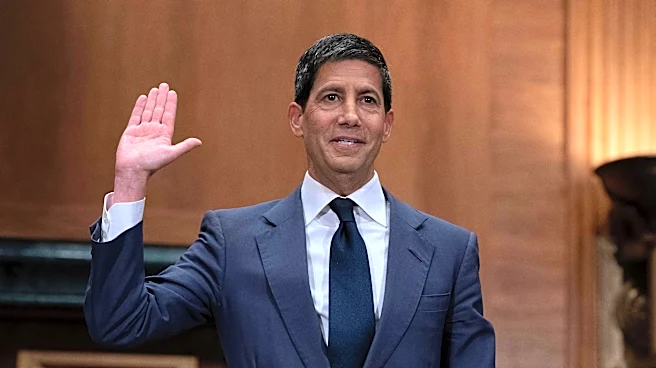
Kevin Warsh is set to succeed Jerome Powell as the Chair of the Federal Reserve, bringing potential changes to the central bank's approach. Warsh has been critical of the Fed's large balance sheet and
intends to deleverage its $6.7 trillion in assets, which could impact the stock market by increasing borrowing costs. Additionally, Warsh aims to redefine the Fed's approach to inflation, moving away from a strict 2% target to a more flexible understanding of price stability. These changes come amidst rising inflation due to the Iran conflict, which has disrupted energy supplies and increased economic pressures.
Why It's Important?
Warsh's leadership could significantly impact U.S. monetary policy and the broader economy. Deleveraging the Fed's balance sheet may lead to higher interest rates, affecting consumer and business borrowing. This could slow economic growth and impact stock market performance, particularly in sectors reliant on low interest rates. Warsh's approach to inflation could provide the Fed with greater flexibility in responding to economic conditions, but it also introduces uncertainty for investors and businesses. The transition in Fed leadership occurs at a critical time, as the U.S. faces economic challenges from international conflicts and domestic inflation.
What's Next?
The financial markets will closely monitor Warsh's actions and statements as he assumes leadership of the Fed. Any changes in monetary policy could have immediate effects on interest rates, stock market performance, and economic growth. Businesses and investors may need to adjust their strategies in response to potential shifts in the Fed's approach. The ongoing Iran conflict and its impact on energy prices will continue to influence economic conditions, adding complexity to Warsh's tenure as Fed Chair.