
What's Happening?
Serve Robotics, a company specializing in sidewalk delivery robots and backed by Uber and Nvidia, has acquired Diligent Robotics. This acquisition, valued at $29 million, aims to integrate Diligent's robots,
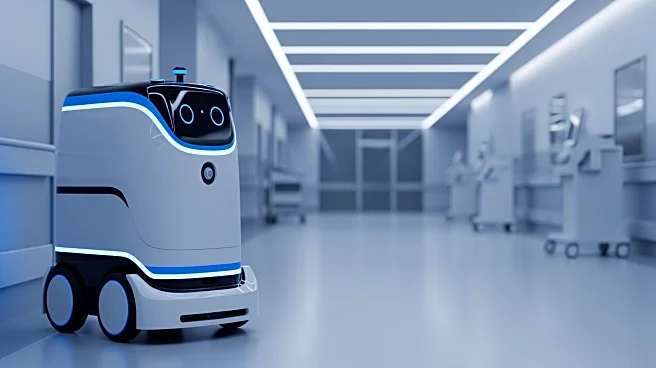
known as Moxi, into hospital logistics. Moxi robots are designed to assist in hospitals by delivering lab samples, supplies, and performing other logistical tasks. This move highlights a growing trend of crossover between autonomous vehicle technology and robotics, as companies like Uber invest in expanding their technological capabilities beyond traditional ride-hailing services. The acquisition is part of a broader strategy to enhance efficiency in healthcare logistics through automation.
Why It's Important?
The acquisition of Diligent Robotics by Serve Robotics signifies a significant step in the integration of robotics into healthcare logistics. By leveraging autonomous technology, hospitals can potentially improve efficiency and reduce the workload on human staff, allowing them to focus more on patient care. This development is part of a larger trend where companies traditionally focused on transportation, like Uber, are diversifying into new sectors such as healthcare. The move could lead to increased adoption of robotics in hospitals, potentially transforming how logistical tasks are managed in healthcare settings. This could result in cost savings and improved service delivery in the healthcare industry.
What's Next?
Following the acquisition, Serve Robotics is expected to focus on the integration of Moxi robots into hospital operations. This may involve pilot programs in select hospitals to test and refine the technology. The success of these integrations could lead to wider adoption across the healthcare sector. Additionally, as Uber continues to invest in autonomous technologies, further expansions into other sectors could be anticipated. Stakeholders in the healthcare industry, including hospital administrators and healthcare providers, will likely monitor these developments closely to assess the impact on operational efficiency and patient care.
Beyond the Headlines
The integration of robotics into hospital logistics raises important ethical and operational questions. As robots take on more tasks traditionally performed by humans, there may be concerns about job displacement and the need for new skills among healthcare workers. Additionally, the reliance on technology for critical tasks in healthcare settings necessitates robust cybersecurity measures to protect sensitive data and ensure patient safety. The long-term implications of such technological integration could lead to a reevaluation of workforce roles and the development of new regulatory frameworks to address these challenges.