






What's Happening?
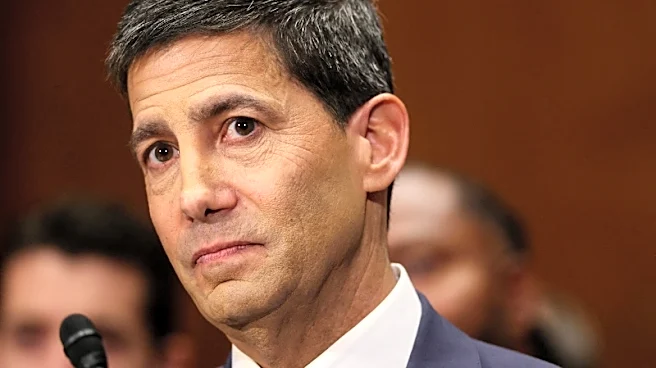
Kevin Warsh has taken over as the new chair of the Federal Reserve, succeeding Jerome Powell. Warsh is set to implement significant changes to the Fed's monetary policy, particularly focusing on reducing the Fed's balance sheet, which currently stands
at approximately $6.7 trillion. This marks a departure from the strategies employed over the past 15 years, which included quantitative easing measures that significantly increased the Fed's assets. Warsh argues that the large balance sheet distorts financial markets and disproportionately benefits those with financial assets. He advocates for a monetary policy that relies more on interest rates rather than the balance sheet to stabilize markets.
Why It's Important?
Warsh's approach could have profound implications for the U.S. economy and financial markets. A reduction in the Fed's balance sheet may lead to higher bond yields, increasing borrowing costs for companies and potentially impacting their investment capabilities and profitability. This shift could also affect stock market dynamics, particularly for tech stocks that have thrived under the previous monetary policies. Investors accustomed to the Fed's intervention as a market stabilizer may face increased volatility and uncertainty. Warsh's policies could redefine the Fed's role in economic stabilization, moving away from the so-called 'Fed put' that has provided a safety net for markets.
What's Next?
Investors are advised to adjust their portfolios in anticipation of these changes. Reducing exposure to stocks heavily reliant on quantitative easing and increasing investments in sectors like financials, which might benefit from a smaller Fed balance sheet, are recommended strategies. Additionally, shifting to shorter-duration bonds could mitigate risks associated with rising yields. As Warsh's policies unfold, market participants should prepare for potential volatility and maintain a long-term investment perspective. The success of Warsh's strategies will depend on his ability to garner support from other Federal Reserve members.