



What's Happening?
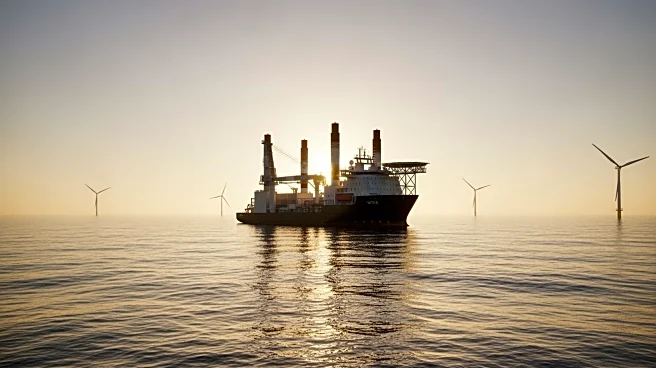
Maersk Offshore Wind has introduced its new wind turbine installation vessel (WTIV), the Maersk Viridis, marking a significant step in the company's expansion into offshore wind energy. The vessel, built by Seatrium, was officially named during a ceremony
where Charlotte Nørkjær Larsen, the ship's godmother, christened it by breaking a champagne bottle against its main crane pedestal. The Maersk Viridis is designed to install offshore wind turbines exceeding 15 megawatts and features a 1,900-tonne main crane with a hook height of 180 meters. The vessel's feeder-based installation design and stabilizing system are intended to enhance operational efficiency by allowing feeder vessels to maintain position during component transfers, even in challenging sea conditions. This design aims to extend operational weather windows and reduce installation time and costs. The vessel is set to begin its first assignment in March 2026 at Equinor's Empire Wind project off the coast of New York, where it will help install turbines to supply electricity to approximately 500,000 homes.
Why It's Important?
The introduction of the Maersk Viridis represents a critical advancement in the U.S. offshore wind sector, which is poised for significant growth as the country seeks to expand its renewable energy capacity. The vessel's capabilities are expected to streamline the installation process of large-scale wind turbines, potentially lowering costs and increasing the efficiency of wind energy projects. This development aligns with broader efforts to transition to cleaner energy sources and reduce reliance on fossil fuels. The Maersk Viridis, being Jones Act-compliant, can operate in U.S. waters, which is crucial for meeting domestic regulatory requirements. The vessel's deployment at the Empire Wind project underscores the growing investment in renewable infrastructure, which could have substantial economic and environmental benefits, including job creation and reduced carbon emissions.
What's Next?
Following its christening, the Maersk Viridis is scheduled to sail to the United States in March 2026 to commence its work on the Empire Wind project. This project is part of a larger initiative to increase offshore wind capacity in the U.S., with potential implications for energy policy and market dynamics. As the vessel begins operations, stakeholders in the renewable energy sector will likely monitor its performance closely to assess its impact on project timelines and costs. The success of the Maersk Viridis could influence future investments in similar technologies and vessels, further accelerating the growth of the offshore wind industry.