
What's Happening?
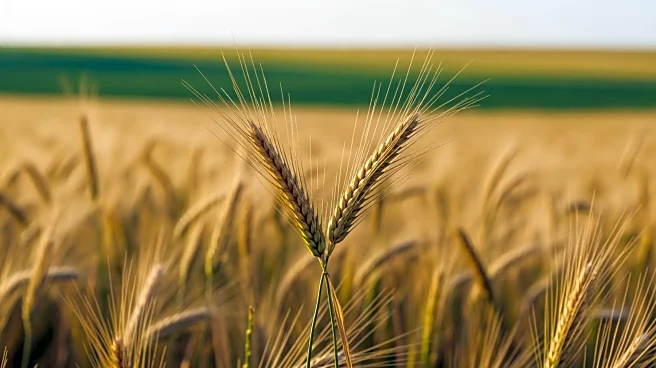
Researchers are developing hybrid wheat varieties that could significantly enhance agricultural productivity in the Great Plains. These hybrids are designed to combine favorable traits from different parent
plants, such as improved drought tolerance and higher yields. Historically, wheat has been a staple crop in the region, but its acreage has declined due to dry conditions and competition from other crops. Unlike corn and soybeans, which have long benefited from hybrid technology, wheat's self-pollinating nature has made it difficult to improve. New techniques, including chemical methods to prevent self-pollination, are being used to overcome these challenges. Field trials indicate that hybrid wheat performs well under various weather conditions, particularly during droughts.
Why It's Important?
The introduction of hybrid wheat could revitalize wheat farming in the Great Plains, offering farmers a more resilient and productive crop option. This development is particularly significant given the region's susceptibility to climate change and water scarcity. By increasing yields and improving drought resistance, hybrid wheat could enhance food security and economic stability for farmers. Additionally, it could reduce the reliance on other crops, diversifying agricultural production and potentially leading to more sustainable farming practices. The success of hybrid wheat could also encourage further investment in agricultural research and innovation.