







What's Happening?
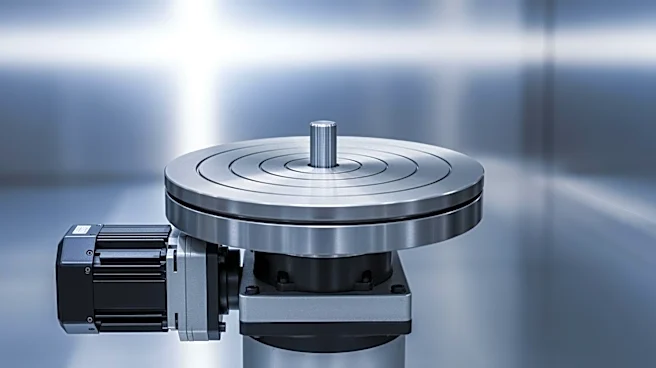
The global market for Rotary Tables with Torque Motor Drive is projected to experience significant growth through 2035, according to a report by IndexBox. This growth is driven by the increasing demand for high-precision manufacturing in advanced industries
such as aerospace, automotive, and semiconductors. Unlike traditional geared tables, these direct-drive systems offer superior accuracy and faster indexing speeds, which are essential for modern multi-axis machining and complex component fabrication. The market is expected to bifurcate into a high-volume segment for standardized applications and a premium segment focused on ultra-precision solutions. The report highlights the core demand drivers, including the adoption of multi-axis CNC machining centers, Industry 4.0 initiatives, and the replacement of outdated geared rotary tables. The aerospace and defense sectors are significant contributors to this demand, requiring advanced components with tight tolerances.
Why It's Important?
The expansion of the Rotary Tables with Torque Motor Drive market is crucial for the advancement of manufacturing technologies in the U.S. and globally. As industries like aerospace and automotive continue to evolve, the need for precise and efficient manufacturing processes becomes more critical. This market growth supports the transition towards smarter, more connected factories, enhancing manufacturing efficiency and competitiveness. Companies in the aerospace and automotive sectors stand to benefit significantly from these advancements, as they require high-performance components with stringent quality standards. The adoption of these technologies can lead to improved product quality, reduced production times, and lower operational costs, providing a competitive edge in the global market.
What's Next?
The market is expected to continue its growth trajectory, with a compound annual growth rate projected in the mid-single digits through 2035. This growth will be supported by ongoing capital investments in manufacturing and the continuous replacement of older machine tools with newer systems. The demand from key sectors like automotive and aerospace will remain strong, driven by the need for lighter, more complex components and the expansion of electric vehicle production. As the market evolves, competition among manufacturers will intensify, focusing on system integration capabilities and total cost of ownership value propositions. Regional dynamics will see Asia-Pacific leading in production and consumption, while North America and Europe will maintain strong innovation and premium adoption rates.