

What's Happening?
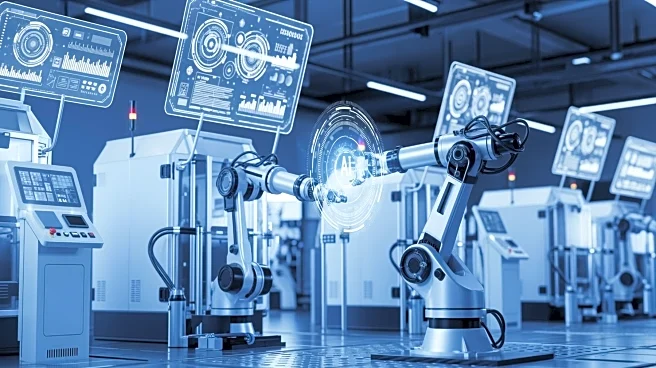
Deloitte has released a new paper titled 'Physical AI: The Moment of Acceleration,' which explores the integration of physical systems with AI, known as Physical AI (PAI). The report indicates that PAI is transitioning from experimental phases to large-scale
deployment across various sectors, particularly in industrial robotics. Currently, only 5% of firms report transformative impacts from PAI, but 41% expect significant changes within three years. The paper emphasizes the importance of aligning operational maturity with technology readiness to fully leverage PAI's potential. Key barriers to adoption include cost, resource requirements, and talent gaps.
Why It's Important?
The advancement of Physical AI represents a significant shift in industrial operations, promising enhanced efficiency and innovation. For U.S. industries, particularly in manufacturing and logistics, adopting PAI could lead to competitive advantages through improved operational capabilities and reduced costs. The report's findings highlight the need for U.S. companies to invest in organizational learning and infrastructure to harness PAI effectively. As global competition intensifies, the ability to integrate PAI could determine industrial leadership and economic growth in the coming decade.
What's Next?
As PAI adoption grows, U.S. companies may need to reassess their operational strategies and invest in workforce training to accommodate new technologies. Deloitte's establishment of a Physical AI Center of Excellence in Shanghai suggests a model for similar initiatives in the U.S. to support PAI deployment. The report's insights could influence policy discussions on technology adoption and workforce development, encouraging collaboration between industry leaders and educational institutions to address skill gaps and ensure a smooth transition to PAI-enhanced operations.