





What's Happening?
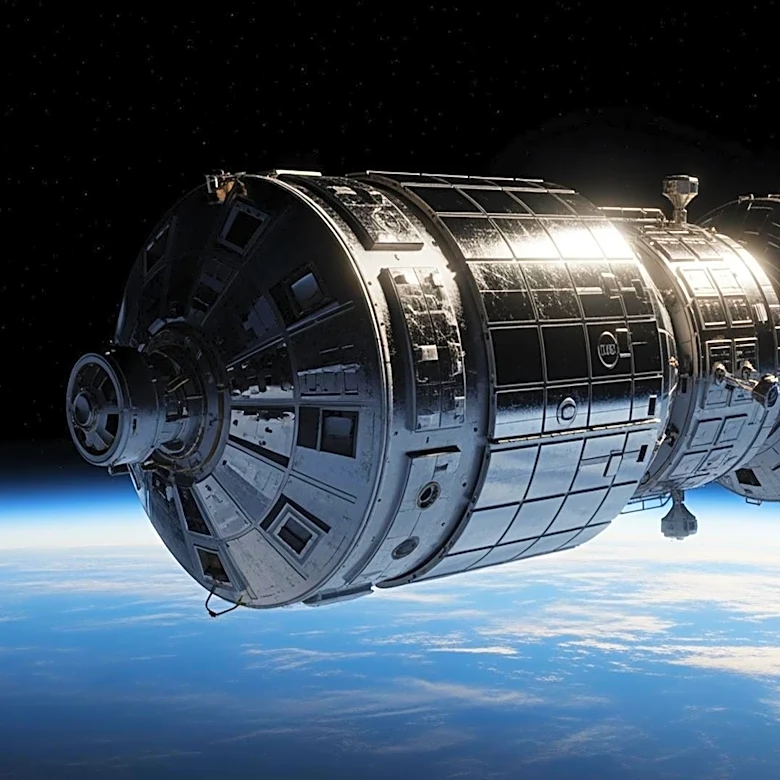
Starcloud, a company focused on orbital data centers, is planning to launch a constellation of 88,000 computing satellites. The initiative aims to provide cloud and edge services for spacecraft and eventually compete with terrestrial data centers on energy
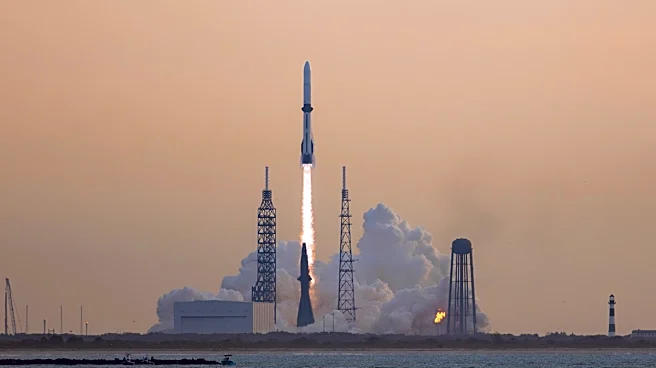
costs. The company has already launched its first satellite, Starcloud-1, equipped with an NVIDIA H100 GPU, marking a significant advancement in space computing power. Starcloud's future plans include launching Starcloud-2, an 8-kilowatt spacecraft, and scaling up to a fleet of three-ton, 200-kilowatt satellites. The success of this ambitious project heavily relies on the frequent flights of SpaceX's Starship, with commercial deployments expected by 2029 or 2030.
Why It's Important?
This development is significant as it represents a potential shift in how data centers operate, moving from Earth to space. By leveraging the unique environment of space, Starcloud aims to reduce energy costs and address the AI energy bottleneck. The project could transform the data center industry by offering a more sustainable and cost-effective solution. Additionally, the collaboration with NVIDIA and the support from the FCC highlight the growing interest and investment in space-based technologies. The success of this initiative could lead to increased competition in the data center market, benefiting industries reliant on cloud computing and AI.
What's Next?
Starcloud plans to continue launching versions of its Starcloud-2 satellites while preparing for the large-scale deployment of its satellite constellation. The company is also working on overcoming technical challenges, such as developing a low-cost, low-mass deployable radiator and ensuring the chips can operate in high-radiation environments. As the project progresses, Starcloud will need to address potential supply chain issues and regulatory processes. The company is also exploring partnerships with major AI companies and the Department of Defense to expand its market reach.