







What's Happening?
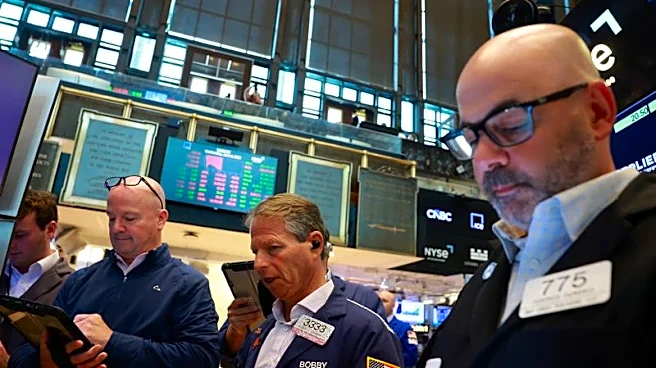
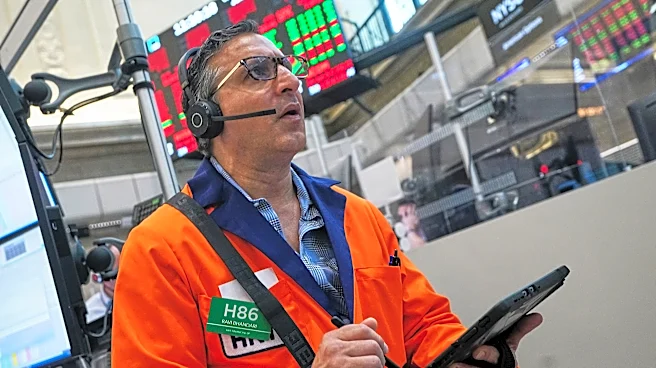
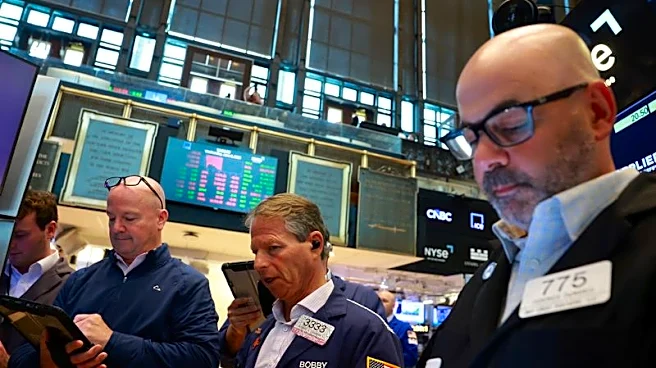
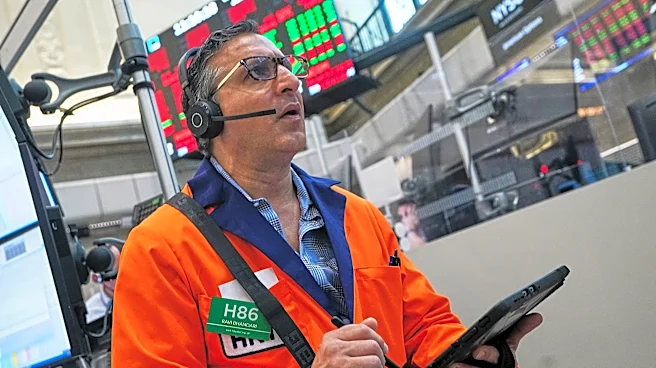
On June 4, Wall Street saw significant movement as the Dow Jones Industrial Average reached a record high, driven by gains in healthcare and financial stocks. However, the Nasdaq Composite experienced a slight decline due to disappointing revenue results
from chipmaker Broadcom, which led to a selloff in chip stocks. Broadcom's shares fell by 12.6%, impacting the overall performance of the Nasdaq. The S&P 500 also posted gains, albeit more muted compared to the Dow. The market was buoyed by progress towards ending the Iran war, with a U.S.-mediated ceasefire agreement between Israel and Lebanon contributing to investor optimism. Despite the ceasefire, pro-Iran Hezbollah rejected the truce, maintaining tensions in the region. Additionally, economic indicators showed an unexpected rise in initial jobless claims and a sharp revision in first-quarter labor costs and productivity.
Why It's Important?
The record high of the Dow Jones Industrial Average reflects investor confidence in certain sectors, particularly healthcare and financials, despite challenges in the technology sector. The selloff in chip stocks, triggered by Broadcom's revenue miss, highlights the volatility and sensitivity of the tech industry to earnings reports. The geopolitical developments in the Middle East, particularly the potential resolution of the Iran conflict, have significant implications for global oil markets and regional stability. The economic data indicating rising jobless claims and increased layoffs, particularly in AI-related sectors, suggest underlying challenges in the labor market that could affect consumer spending and economic growth.
What's Next?
Investors will likely continue to monitor geopolitical developments in the Middle East, as any resolution to the Iran conflict could stabilize oil prices and reduce market volatility. The tech sector may face further scrutiny as investors assess the sustainability of current valuations amid earnings fluctuations. Economic indicators, such as jobless claims and labor costs, will be closely watched for signs of recovery or further deterioration. The market's response to these factors will shape investment strategies and sector performance in the coming weeks.