







What's Happening?
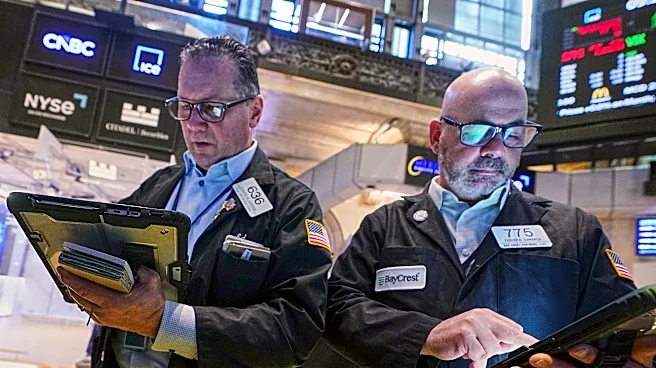
SpaceX has completed the largest initial public offering (IPO) in history, raising approximately $75 billion at a valuation of about $1.75 trillion. The stock surged 19% on its first day, pushing the company's value above $2 trillion. This IPO occurs
amid a significant wave of artificial intelligence (AI) spending, with major tech companies investing heavily in data centers and chips. The market is divided on whether this represents a peak in market enthusiasm or a rational response to high demand. The S&P 500's price-to-earnings ratio is near levels seen during the dot-com bubble, raising concerns about market overvaluation.
Why It's Important?
The SpaceX IPO highlights the intense interest and investment in AI technologies, which could have far-reaching implications for the tech industry and broader market. The substantial capital raised and the high valuation reflect investor confidence in SpaceX's potential, particularly in its AI and satellite internet services. However, the high valuation and significant losses reported by SpaceX raise questions about sustainability and profitability. The IPO's success could encourage more tech companies to go public, potentially inflating market valuations further. This development is crucial for investors and policymakers monitoring market stability and the impact of AI investments.
What's Next?
The market will closely watch SpaceX's performance and its ability to deliver on its high valuation. Investors will be keen to see if the company's AI and satellite services can generate sustainable profits. The broader tech sector may experience increased scrutiny regarding valuations and profitability, especially if more companies follow SpaceX's lead. Additionally, the market's reaction to AI investments and IPOs will be a key indicator of future trends in tech financing and innovation.