






What's Happening?
Gas prices in California are expected to continue rising as geopolitical tensions, particularly the ongoing war in Iran, impact global oil markets. According to Patrick De Haan, head of petroleum analysis at GasBuddy, the failure of ceasefire talks between
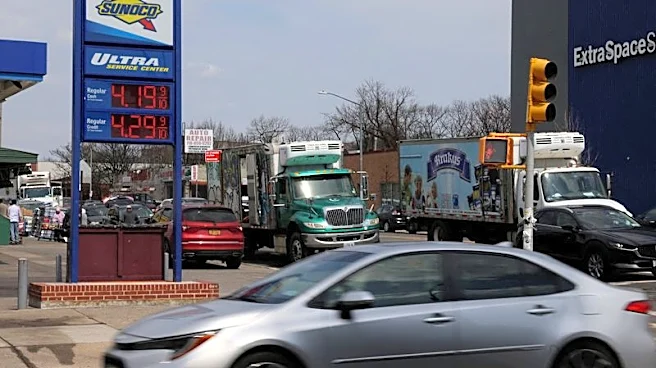
the U.S. and Tehran has led to increased volatility in fuel prices. California's average gas price has reached approximately $5.96 per gallon, a significant increase from $4.75 the previous year. The national average has also risen, reaching $4.17 per gallon, the highest in four years. The situation is exacerbated by California's high fuel taxes and seasonal switch to summer-blend gasoline, along with refinery constraints.
Why It's Important?
The rising gas prices in California and across the U.S. have significant implications for consumers and the broader economy. Higher fuel costs increase transportation expenses, affecting everything from commuting to the cost of goods and services. This can contribute to inflationary pressures, further straining household budgets. The geopolitical tensions affecting oil supply highlight the vulnerability of energy markets to international events, emphasizing the need for energy diversification and stability. The situation also underscores the importance of diplomatic efforts to resolve conflicts that impact global energy supplies.
What's Next?
As geopolitical tensions persist, gas prices are likely to remain volatile. Analysts predict that any developments in the U.S.-Iran relations or changes in global oil supply routes could further influence prices. Consumers and businesses may need to brace for continued fluctuations in fuel costs. Policymakers might explore strategies to mitigate the impact of rising energy prices, such as promoting alternative energy sources or implementing measures to stabilize the market. The ongoing situation will require close monitoring of international developments and their potential effects on domestic energy prices.