


What's Happening?
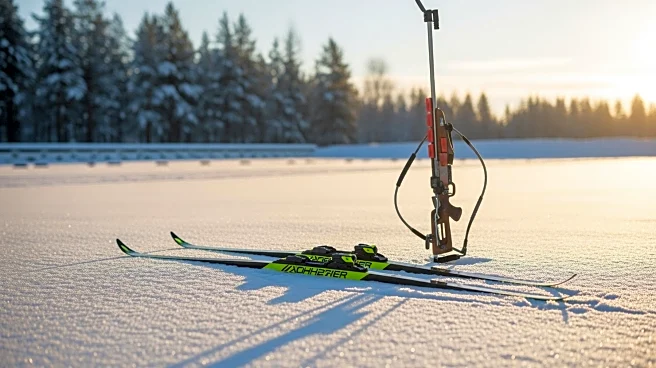
Martin Ponsiluoma of Sweden secured a gold medal in the 12.5-kilometer pursuit biathlon race at the Milan-Cortina Winter Olympics. Ponsiluoma's victory came after a strong performance on the shooting range, where he hit all his targets, allowing him to exit first and maintain his lead. Norwegian biathlete Sturla Holm Laegreid won silver, while Emilien Jacquelin of France, who led initially, took bronze after missing two targets. This win marks Sweden's first biathlon medal in these Winter Games. Ponsiluoma completed the race in 31 minutes and 11.9 seconds, with Laegreid and Jacquelin finishing 20.6 and 29.7 seconds behind, respectively.
Why It's Important?
Ponsiluoma's victory is significant as it highlights Sweden's competitive presence in the biathlon at the Winter
Olympics, a sport traditionally dominated by countries like Norway and France. This achievement could boost Sweden's standing in the international biathlon community and inspire future athletes in the sport. Additionally, the race showcased the intense competition and strategic elements involved in biathlon, where shooting accuracy and skiing speed are crucial. The event also drew attention due to Laegreid's personal revelations earlier in the week, adding a human interest angle to the sporting achievements.
What's Next?
Following this event, the focus will shift to upcoming biathlon races and other Winter Olympic events. Athletes like Ponsiluoma and Laegreid will continue to compete, potentially influencing their countries' overall medal standings. The personal dynamics and rivalries highlighted in this race may continue to play a role in future competitions, adding an extra layer of intrigue for spectators and media coverage.
Beyond the Headlines
The race also underscores the psychological aspects of competitive sports, where personal issues and public scrutiny can impact performance. Laegreid's candidness about his personal life and the subsequent media attention may influence how athletes manage their public personas and personal challenges. This incident could lead to broader discussions about the pressures athletes face and the importance of mental health support in sports.