






What's Happening?
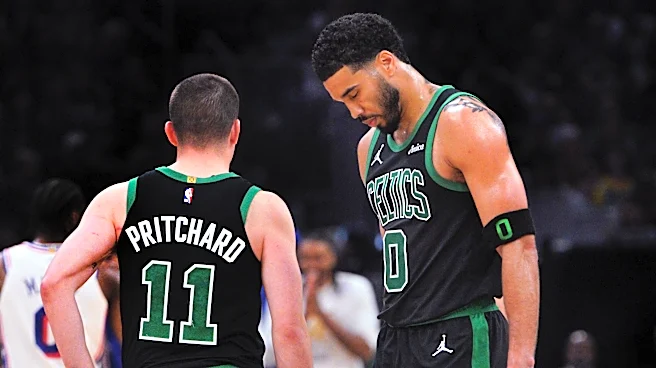
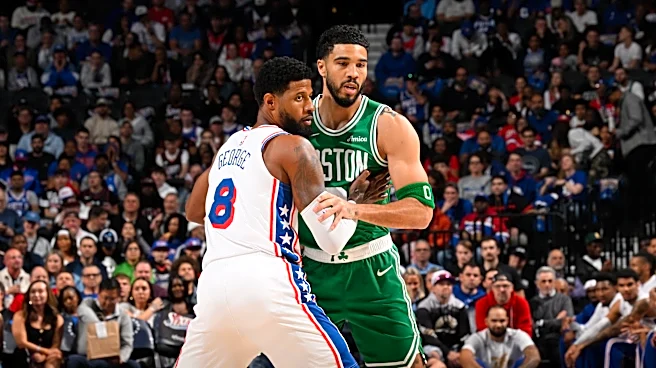
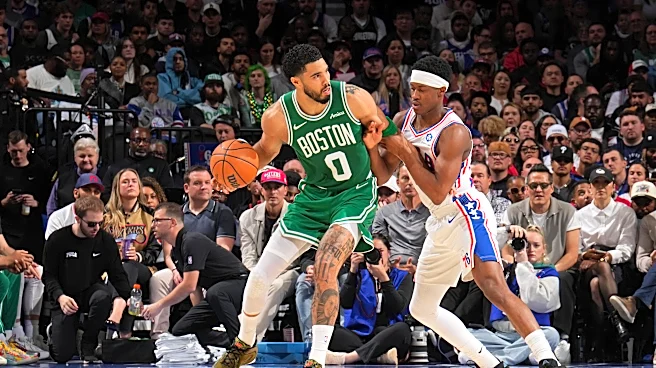
Boston Celtics star Jayson Tatum has been ruled out of Game 7 against the Philadelphia 76ers due to left knee stiffness. The announcement was made approximately 90 minutes before the crucial first-round playoff matchup. Celtics coach Joe Mazzulla stated
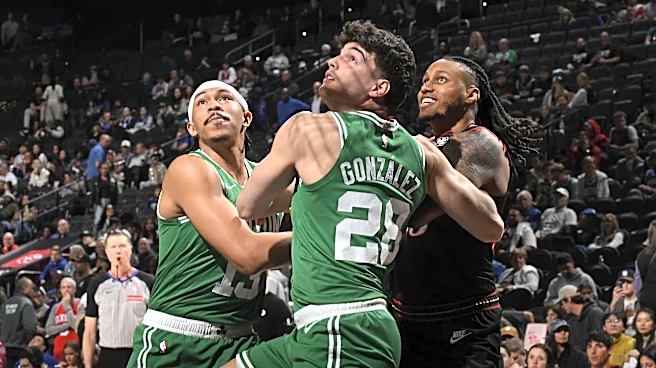
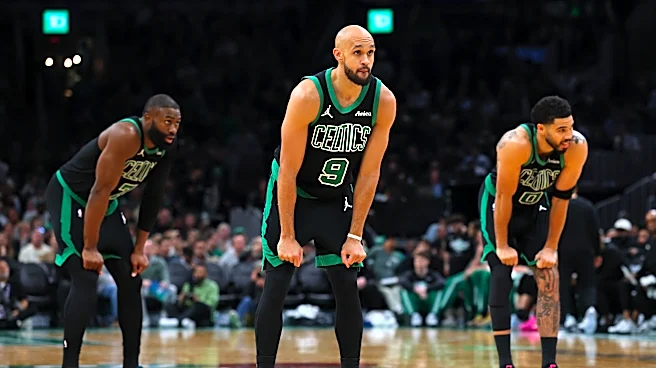
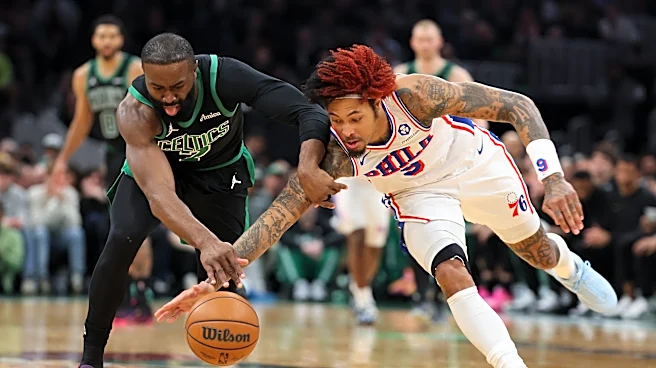
that Tatum reported knee discomfort earlier in the day, leading the medical team and coaching staff to decide against his participation. Tatum has been a key player for the Celtics, averaging 23.3 points, 10.2 rebounds, and 6.8 assists in the series. His absence prompted significant changes in the starting lineup, with Baylor Scheierman, Luka Garza, and Ron Harper Jr. joining Jaylen Brown and Derrick White. Tatum's knee issue follows a brief exit in Game 6 for calf treatment, though he downplayed the severity at the time. This marks the 67th game Tatum has missed this season, and the fifth time the 76ers face the Celtics without him.
Why It's Important?
Tatum's absence is a significant blow to the Celtics as they face a decisive Game 7 against the 76ers. His performance has been instrumental in the series, and his absence could alter the dynamics of the game. The Celtics have had to adjust their strategy and lineup, which could impact their effectiveness on the court. For the 76ers, Tatum's absence might provide a strategic advantage, as they have previously faced the Celtics without him and are familiar with the adjustments needed. The outcome of this game could have broader implications for the Celtics' playoff run and their ability to compete at a high level without one of their star players.
What's Next?
The Celtics will need to rely on their adjusted lineup and the performance of other key players to secure a victory in Game 7. The coaching staff will likely focus on maximizing the strengths of the available players and adapting their game plan to counter the 76ers' strategies. The 76ers, on the other hand, will aim to capitalize on Tatum's absence and advance to the next round. The result of this game will determine the future playoff path for both teams, with potential changes in team dynamics and strategies based on the outcome.