

What's Happening?
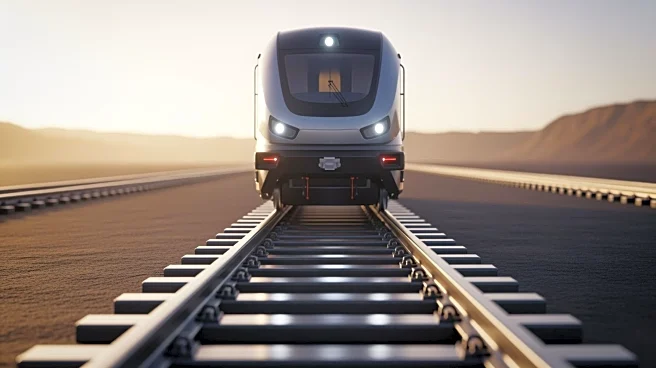
Rio Tinto has been operating an entirely automated railway system, known as AutoHaul, in the Pilbara region of Western Australia for nearly seven years. This system allows trains, each up to 2.5 kilometers long, to transport iron ore autonomously from
mines to ports. The AutoHaul system, which operates up to 53 trains simultaneously, has significantly improved railway safety and efficiency by eliminating the need for driver handovers and increasing line speeds. The system is managed from an operations control center in Perth, which oversees the trains' routes and operations. AutoHaul has also introduced advanced safety features, such as laser scanners at level crossings to prevent collisions, and is working on further enhancements like a collision avoidance system.
Why It's Important?
The implementation of AutoHaul represents a significant advancement in railway automation, setting a benchmark for other heavy-haul railways globally. By automating operations, Rio Tinto has reduced operating costs, improved safety, and increased efficiency in its rail network. This development is crucial for the mining industry, as it addresses capacity constraints and enhances the ability to meet growing demand for iron ore. The system's success could encourage other industries to adopt similar technologies, potentially leading to broader economic benefits through increased productivity and reduced operational risks.
What's Next?
Rio Tinto plans to continue refining the AutoHaul system to unlock further efficiencies. This includes ongoing trials with collision avoidance technology and the potential for incremental upgrades to replace legacy hardware. The company aims to maintain a continuously upgradable railway system, enhancing productivity and safety over time. As the system evolves, it may influence regulatory frameworks and industry standards for automated rail operations, potentially leading to wider adoption of similar technologies in other regions and sectors.
Beyond the Headlines
The success of AutoHaul highlights the potential for automation to transform traditional industries, offering insights into the future of work and the role of technology in enhancing operational efficiency. The system's development also underscores the importance of a supportive regulatory environment that encourages innovation while ensuring safety. As automation becomes more prevalent, it raises questions about the future of employment in industries traditionally reliant on manual labor, prompting discussions on workforce adaptation and skills development.