






What's Happening?
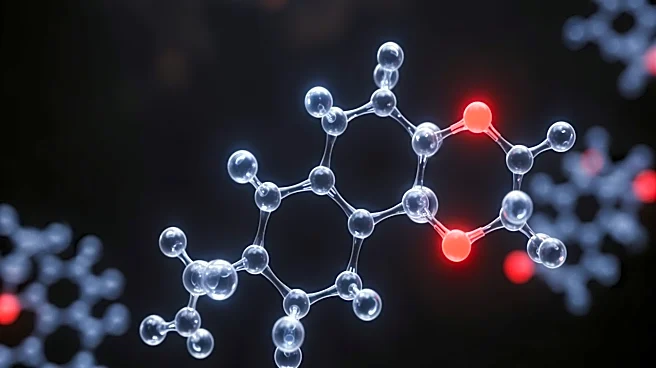
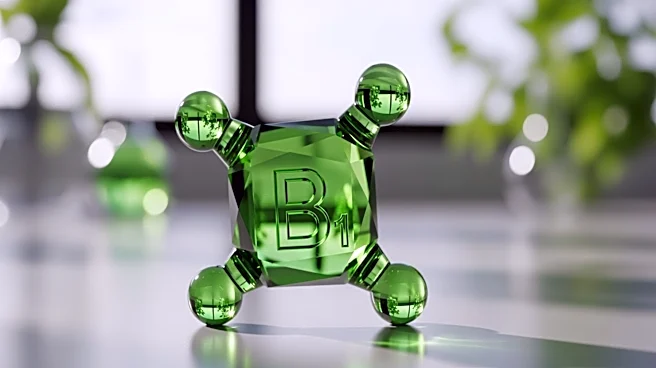
A longstanding theory about vitamin B1, proposed 67 years ago, has been confirmed through recent scientific research. Chemists have successfully stabilized a reactive carbene in water, a feat previously thought impossible due to the molecule's instability.
This breakthrough was achieved by using a protective molecular structure, allowing the carbene to remain intact for months. The study, published in Science Advances, provides experimental evidence supporting the theory that vitamin B1 can form a carbene-like structure to drive biochemical reactions. This discovery not only resolves a biochemical puzzle but also suggests potential for cleaner chemical production methods.
Why It's Important?
The confirmation of the vitamin B1 theory has significant implications for the field of chemistry and industrial manufacturing. Carbenes are used in metal-based catalysts for producing pharmaceuticals and other materials, often relying on toxic solvents. Stabilizing reactive intermediates in water could lead to safer and more environmentally friendly production processes. This development could transform how chemicals are manufactured, reducing reliance on harmful solvents and promoting sustainable practices. The research highlights the importance of basic scientific inquiry and its potential to drive innovation in industrial applications.