







What's Happening?
ASML, a Dutch semiconductor equipment manufacturer, saw its shares fall after U.S. lawmakers proposed the Multilateral Alignment of Technology Controls on Hardware (MATCH) Act. This legislation aims to restrict China's access to chipmaking tools, potentially
affecting ASML's sales to China. ASML produces extreme ultraviolet (EUV) lithography machines, essential for advanced chip manufacturing, which have never been exported to China. The company also makes deep ultraviolet (DUV) machines, used for less advanced semiconductors, which could be banned under the new act. Currently, China accounts for a significant portion of ASML's sales, and the proposed restrictions could further impact this market.
Why It's Important?
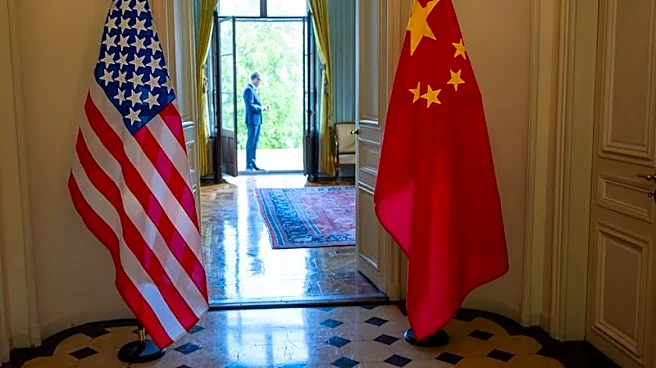
The proposed U.S. export curbs are part of broader efforts to limit China's technological advancements in semiconductors, a critical component of modern electronics. If enacted, these restrictions could disrupt China's semiconductor manufacturing capabilities, as the country heavily relies on ASML's technology. This move could also affect global supply chains and the semiconductor industry, potentially leading to increased tensions between the U.S. and China. For ASML, the legislation could result in a significant reduction in sales, particularly in China, which is a major market for its DUV machines.
What's Next?
The MATCH Act is still in the early stages of the legislative process, and its final outcome remains uncertain. If passed, it could lead to a geopolitical shift in the semiconductor industry, with potential short-term volatility in ASML's sales. The company may need to explore alternative markets or adjust its business strategy to mitigate the impact of reduced sales in China. Additionally, the legislation could prompt China to accelerate its efforts to develop domestic alternatives to ASML's technology.