






What's Happening?
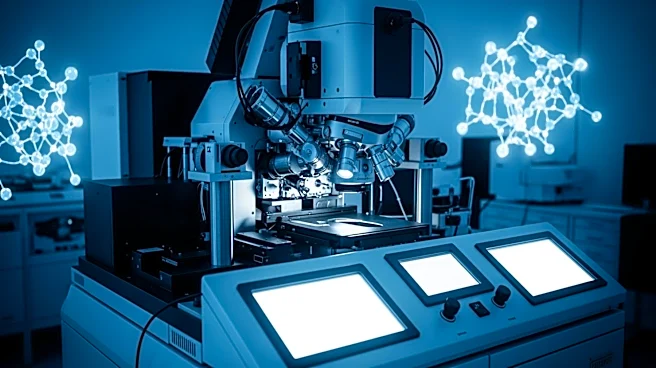
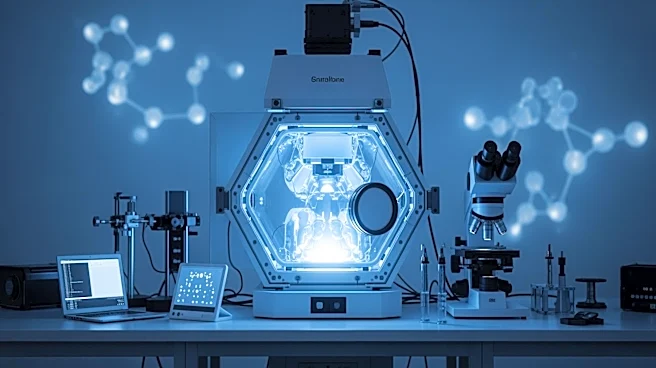
Bruker Corporation has unveiled a series of new Nuclear Magnetic Resonance (NMR) products and workflow solutions at the Experimental Nuclear Magnetic Resonance Conference (ENC) 2026. These innovations aim to improve performance, sensitivity, and automation
in both research and applied NMR settings. Key introductions include the AVANCE NEO-X NMR electronics, which allow laboratories to upgrade their console generation without disrupting established workflows, and the Advanced Chemical Profiling 2.0 software, which automates workflows from acquisition through reporting. Additionally, Bruker has expanded its Dynamic Nuclear Polarization (DNP) portfolio with new standard-bore DNP probes for solid-state NMR, enhancing sensitivity for biosolids applications. The company also introduced the Fourier 80 Duo, establishing 80 MHz as an affordable standard for labs transitioning from 60 MHz instruments. These advancements are designed to support a wide range of applications, including structural biology, molecular dynamics, and pharmaceutical research.
Why It's Important?
The introduction of these advanced NMR products by Bruker Corporation is significant for the scientific community, particularly in the fields of molecular biology and pharmaceutical research. By enhancing automation and sensitivity, these products allow researchers to conduct more efficient and accurate experiments, potentially leading to faster scientific discoveries and innovations. The automation of complex tasks reduces the need for manual interpretation, thereby increasing productivity and enabling scientists to focus on high-value research. This can lead to breakthroughs in understanding molecular structures and dynamics, which are crucial for drug development and other applications. Furthermore, the expansion of DNP capabilities supports high-throughput studies, which are essential for advancing research in catalysis and chemical kinetics.
What's Next?
Bruker Corporation's new NMR products are expected to be integrated into laboratories worldwide, enhancing research capabilities across various scientific disciplines. As these products become more widely adopted, they may lead to increased collaboration between research institutions and industries, fostering innovation in fields such as biopharma and cleantech. The automation and improved sensitivity offered by these products could also drive advancements in AI-assisted research, enabling more complex data analysis and decision-making processes. Researchers and industry leaders will likely monitor the impact of these technologies on productivity and scientific outcomes, potentially leading to further investments in NMR technology.
Beyond the Headlines
The launch of Bruker's advanced NMR products highlights the ongoing evolution of scientific research tools, emphasizing the importance of automation and data-driven workflows. These developments may influence the ethical considerations surrounding AI-assisted research, as automated systems become more prevalent in scientific studies. Additionally, the increased efficiency and accuracy of NMR technology could lead to shifts in research funding priorities, with more resources allocated to projects that leverage these advanced tools. As the scientific community adapts to these changes, there may be discussions about the balance between human expertise and machine-driven analysis in research settings.