
What's Happening?
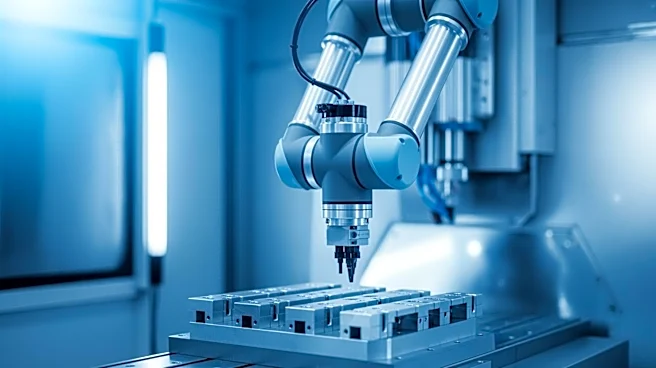
Robotic arms are increasingly being integrated into CNC machine operations, transforming the manufacturing landscape. These AI-enabled robotic systems are allowing for near-continuous production, faster
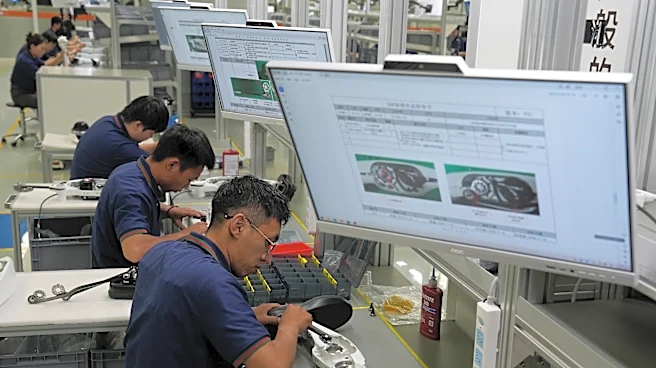
changeovers, and machine utilization rates exceeding 97%. This shift is largely driven by labor shortages, which have prompted manufacturers to adopt automation to maintain and scale production without expanding their workforce. The integration of robotic arms into CNC cells enables lights-out production, where machines operate through the night without human supervision. This development marks a significant departure from traditional manufacturing processes, where robots were limited to simple, isolated tasks.
Why It's Important?
The adoption of robotic arms in CNC operations is crucial for the manufacturing industry, particularly in the context of labor shortages. As the demand for skilled labor outpaces supply, manufacturers are turning to automation to fill the gap. This transition not only helps maintain production levels but also enhances efficiency by reducing human error and downtime. The ability to operate machines continuously without human intervention can lead to significant cost savings and increased output. This shift also reflects a broader trend towards automation in various industries, highlighting the growing importance of technology in addressing workforce challenges.
What's Next?
As manufacturers continue to integrate robotic arms into their operations, we can expect further advancements in automation technology. Companies may invest in more sophisticated AI systems to enhance the capabilities of robotic arms, allowing for even greater efficiency and precision. Additionally, the trend towards automation could lead to changes in workforce dynamics, with a potential increase in demand for skilled workers who can manage and maintain these advanced systems. Policymakers and industry leaders may need to address the implications of this shift, including potential job displacement and the need for workforce retraining.