





What's Happening?
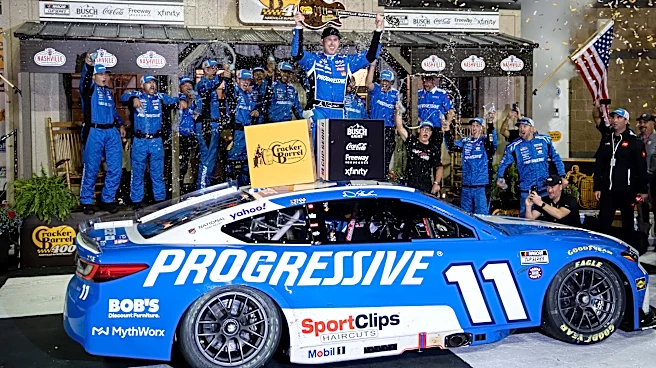
The recent NASCAR Cup Series race at Nashville Superspeedway has sparked discussions about the length of certain races. The event, which ended with Denny Hamlin taking the checkered flag at 12:25 a.m. ET, was delayed by rain and lasted 3 hours and 44
minutes. This duration has raised questions about whether the Nashville race, a 300-lap, 400-mile event, is too long, especially with the introduction of the Next Gen car. Historically, NASCAR has shortened races at other venues, such as Dover and Pocono, to enhance viewer engagement and manage race duration. The debate centers on balancing the expectations of fans who travel to the races with those watching from home.
Why It's Important?
The length of NASCAR races is crucial for maintaining fan interest and ensuring the sport's sustainability. Long races can lead to viewer fatigue, especially for those watching on television, potentially impacting ratings and advertising revenue. Shortening races could make them more exciting and accessible, attracting a broader audience. This change could also align with modern viewing habits, where shorter, more dynamic content is preferred. For NASCAR, finding the right balance between tradition and innovation is key to retaining its fan base and attracting new viewers.
What's Next?
NASCAR may consider experimenting with shorter race formats at select venues, such as Nashville, to assess the impact on fan engagement and race dynamics. Potential changes could include reducing the Nashville race to 350 miles or altering the length of races at other tracks like Talladega and Bristol. These adjustments would aim to enhance the viewing experience while preserving the competitive nature of the sport. NASCAR's decision-making will likely involve feedback from teams, drivers, and fans to ensure any changes meet the needs of all stakeholders.