






What's Happening?
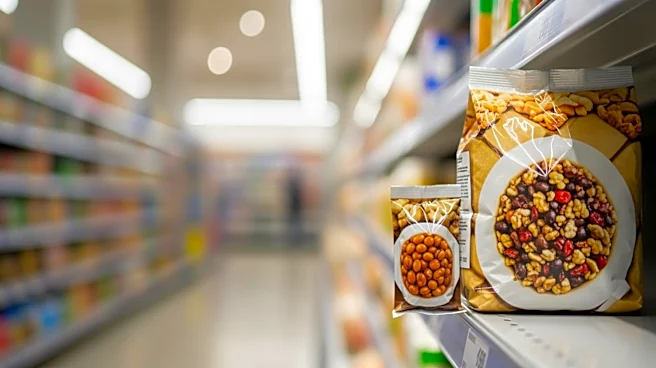
A recent analysis by InvestorsObserver has revealed that U.S. consumers are facing rising grocery bills due to shrinkflation, where product sizes decrease while prices remain the same or increase. The study found that the average family of four is spending
$741 more annually on groceries compared to 2020, with $41 of this increase attributed to reduced package sizes. Notable examples include Coca-Cola's 2-liter bottle price rising by 48% since 2020, and the 12-pack of cans increasing by 82%. The phenomenon is particularly challenging for low-income families who may not notice the subtle changes in product sizes.
Why It's Important?
Shrinkflation poses a significant challenge to consumers, particularly those with limited financial resources, as it effectively reduces purchasing power without obvious price hikes. This trend can lead to increased financial strain on households already struggling with inflation and rising living costs. For businesses, shrinkflation may offer short-term financial benefits but risks long-term consumer trust and brand loyalty. The practice also raises ethical concerns about transparency and consumer rights, as many shoppers may feel misled by unchanged packaging that contains less product.