







What's Happening?
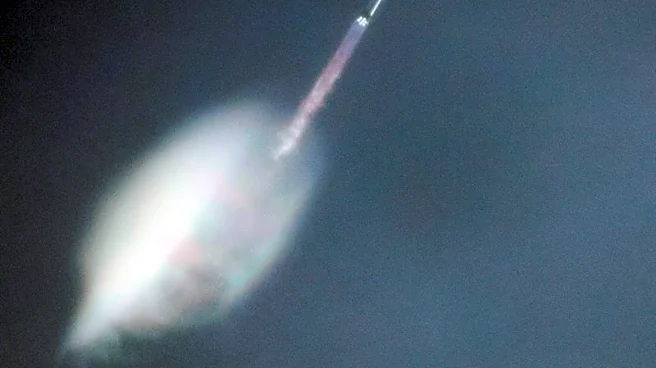
AST SpaceMobile, a company developing a space-based cellular broadband network, announced that its BlueBird 7 satellite will be de-orbited following a launch anomaly. The satellite, launched on the New Glenn vehicle, was placed into a lower orbit than
planned, rendering it unable to sustain operations. Despite the setback, the company expects to recover the satellite's cost through insurance. BlueBird 7 was intended to be part of a larger constellation aimed at providing global cellular broadband coverage. AST SpaceMobile plans to continue its satellite deployment, with additional launches scheduled throughout 2026.
Why It's Important?
The de-orbiting of BlueBird 7 highlights the challenges and risks associated with satellite launches, particularly for companies aiming to build extensive space-based networks. AST SpaceMobile's project is significant as it seeks to provide global broadband access, potentially transforming telecommunications by reaching underserved areas. The incident underscores the importance of reliable launch systems and the financial safeguards like insurance that companies must have in place. The continued development of such networks could have far-reaching implications for global connectivity and the telecommunications industry.
What's Next?
AST SpaceMobile plans to proceed with its satellite deployment schedule, aiming to have approximately 45 satellites in orbit by the end of 2026. The company is working with multiple launch providers to ensure a steady pace of launches. The success of future launches will be critical for AST SpaceMobile to achieve its goal of creating a comprehensive space-based cellular network. The industry will be watching closely to see how the company addresses the challenges faced during the BlueBird 7 launch and how it impacts their overall strategy.