


What's Happening?
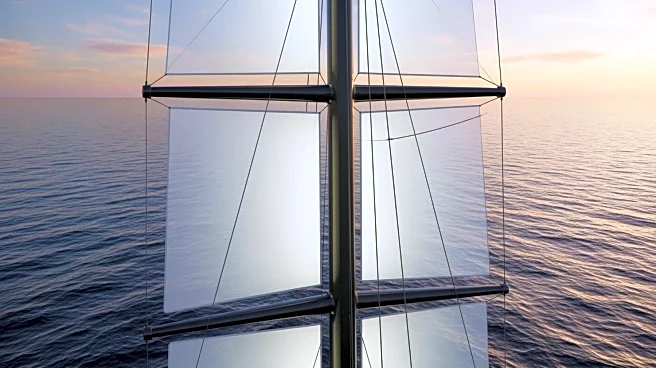
Eastern Pacific Shipping (EPS) and bound4blue have successfully completed the second installation of eSAILs on EPS's fleet. This project involved fitting three 22-meter-high eSAIL units on the MR tanker Pacific Sunstone at New Times Shipbuilding in Jiangsu
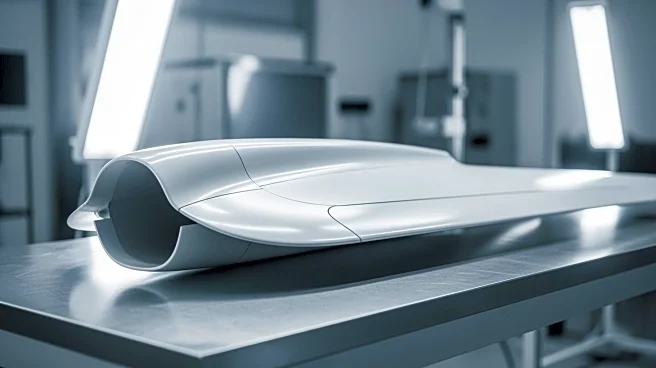
Province, China. This marks EPS's first newbuild installation following a successful retrofit on the Pacific Sentinel. The eSAILs, known for their smaller footprint and ability to generate lift up to seven times greater than conventional rigid sails, were integrated into the newbuilding program without major structural modifications. The installation process was designed for straightforward integration, ensuring no significant delays. The eSAILs are expected to provide reliable power, reduce main engine loads, and save operational expenses, with a typical payback period of less than five years. The technology is DNV type approved and is becoming a preferred choice among global shipowners.
Why It's Important?
The completion of the eSAIL installation on the Pacific Sunstone is significant for the maritime industry as it demonstrates the viability and benefits of wind-assisted propulsion systems. These systems are crucial for reducing fuel consumption and emissions, aligning with global regulatory frameworks such as the Carbon Intensity Indicator (CII), EU Emissions Trading System (ETS), and Energy Efficiency Design Index (EEDI/EEXI). By achieving an average of 8% net power reduction and 5.5% net fuel savings, the eSAIL technology offers a sustainable solution for shipowners looking to comply with environmental regulations and reduce operational costs. This development highlights the growing trend towards decarbonization in the shipping industry, driven by both regulatory pressures and the need for cost-effective operations.
What's Next?
With the successful implementation of eSAILs on the Pacific Sunstone, Eastern Pacific Shipping is likely to continue exploring further installations across its fleet. The positive results from the Pacific Sentinel and Pacific Sunstone could encourage other shipowners to adopt similar technologies, accelerating the shift towards greener maritime operations. As regulatory frameworks tighten, the demand for innovative solutions like eSAILs is expected to grow, prompting further advancements in wind-assisted propulsion technologies. Additionally, the maritime industry may see increased collaboration between technology providers and shipowners to develop and implement sustainable solutions.