






What's Happening?
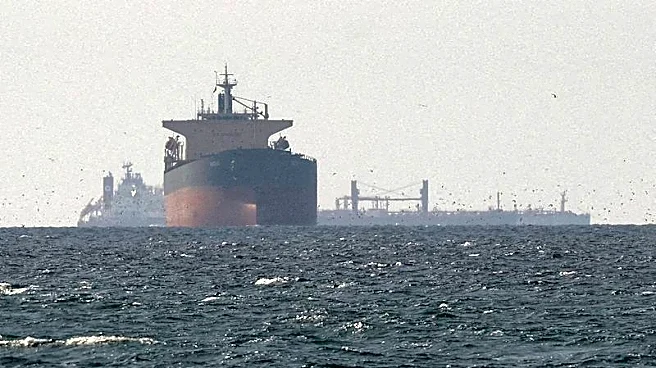
A tentative agreement to end the Iran war and reopen the Strait of Hormuz has led to a significant rise in U.S. stock market futures and a drop in oil prices. President Trump confirmed the initial agreement, which includes ending the U.S. naval blockade
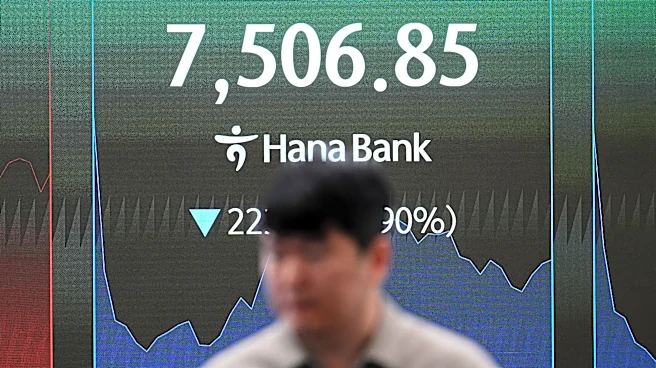
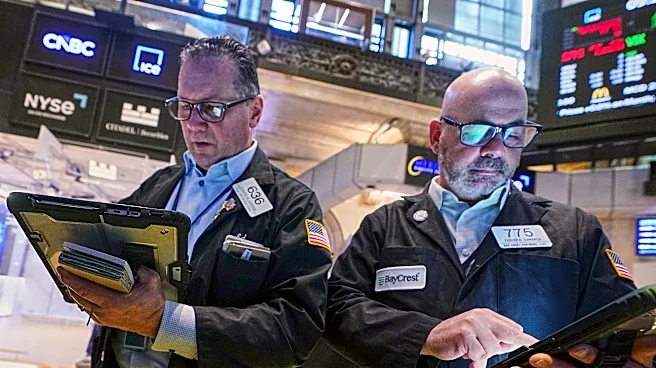
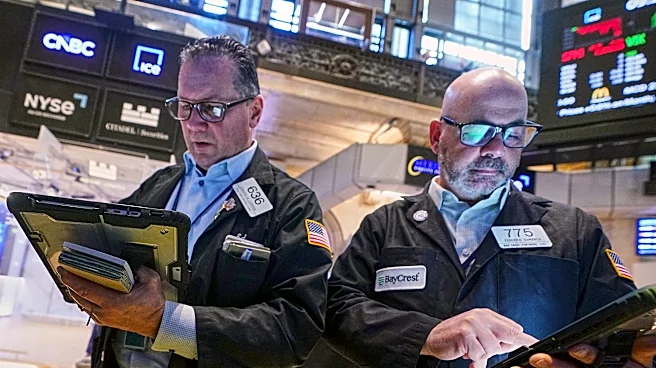
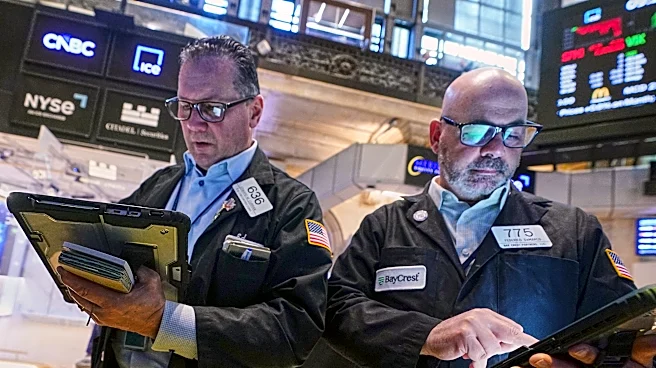
of Iranian ports. Iran has also confirmed the deal, with a formal signing expected in Switzerland. The announcement has caused futures for the S&P 500 and Nasdaq to climb by 1.3%, while the Dow Jones Industrial Average futures increased by 0.9%. The price of Brent crude oil fell by $4.28 to $83.05 per barrel, and U.S. benchmark crude dropped by $4.55 to $80.33 per barrel, marking the lowest levels since the war began in February.
Why It's Important?
The tentative deal is significant as it could stabilize global oil markets and reduce energy costs, which have been elevated due to the conflict. The reopening of the Strait of Hormuz is crucial for global oil supply, and the agreement could alleviate some of the economic pressures caused by the war. The stock market's positive response reflects investor optimism about reduced geopolitical tensions and potential economic benefits. However, the market remains cautious, as the full implementation of the deal and compliance by Iran are yet to be confirmed.
What's Next?
The formal signing of the agreement is expected to take place in Switzerland, with broader negotiations on Iran's nuclear program anticipated over the next 60 days. The market will closely monitor these developments, as well as the reactions from major stakeholders, including shipping and insurance companies, which are crucial for the free flow of oil and gas supplies. Additionally, upcoming interest rate decisions from the Federal Reserve and other central banks could further influence market dynamics.