








What's Happening?
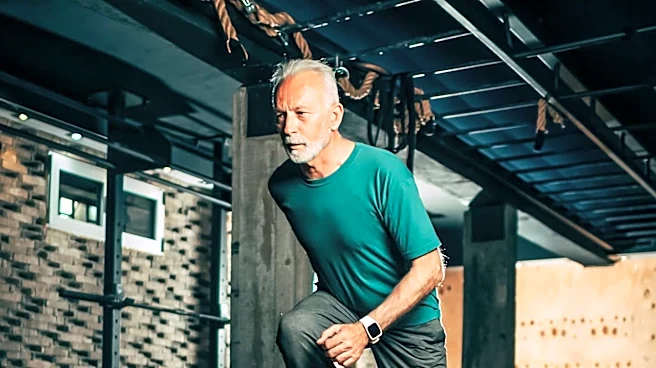
Fitness coach Dan John has shared essential training tips for men over 50, emphasizing the importance of maintaining muscle mass, mobility, and overall health. According to John, as men age, the focus of their workouts should shift from chasing numbers
to preserving lean body mass and staying mobile. He suggests incorporating higher reps and bodybuilding-style training to maintain physique and joint mobility, while also including heavier strength work to sustain overall strength. John also highlights the benefits of walking after workouts, citing research from The Lancet that supports walking as a method to reduce lower back pain and improve quality of life. Additionally, he advises not to lose one's 'spring' by incorporating small, reactive movements and light plyometric exercises.
Why It's Important?
These training tips are significant as they address the common challenges faced by men over 50, such as muscle loss, decreased mobility, and increased risk of injury. By focusing on maintaining lean body mass and mobility, older adults can improve their quality of life and reduce the risk of age-related health issues. Walking, in particular, is highlighted as a simple yet effective exercise to support lower back health and overall well-being. This approach to fitness can help older men remain active and independent, potentially reducing healthcare costs and improving longevity.
What's Next?
Men over 50 who adopt these training tips may experience improved physical health and mobility. Fitness professionals and healthcare providers might increasingly recommend similar strategies to their clients and patients, emphasizing the importance of tailored exercise programs for older adults. As awareness of age-appropriate fitness grows, there may be a rise in specialized fitness programs and resources catering to this demographic, encouraging more men to stay active and healthy as they age.
Beyond the Headlines
The emphasis on maintaining 'spring' and mobility highlights a cultural shift towards valuing functional fitness over purely aesthetic goals. This approach aligns with a broader trend in the fitness industry that prioritizes long-term health and functionality over short-term gains. As more people recognize the benefits of this mindset, it could lead to a reevaluation of fitness goals across all age groups, promoting a more holistic view of health and wellness.