
What's Happening?
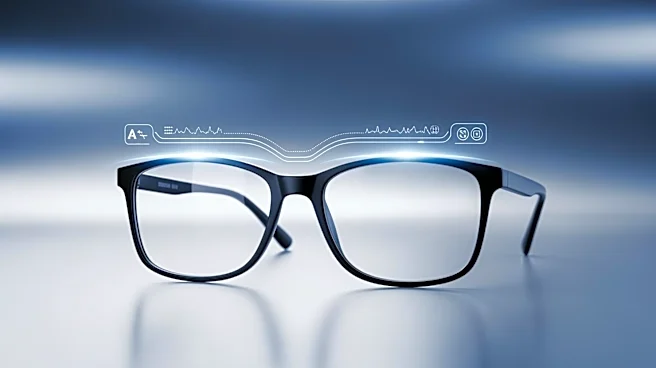
Ray-Ban Meta has announced the release of two new prescription smart glasses models, priced at $499, set to launch on April 14, 2026. These models, named Blayzer Optics and Scriber Optics, are designed
to cater to prescription wearers, featuring adjustable temple tips, interchangeable nosepads, and a custom action button. This launch marks a significant move by Meta and EssilorLuxottica to integrate smart glasses into mainstream optical retail channels, potentially transforming how connected eyewear is purchased. The introduction of these models aims to make smart glasses more accessible to the billions who require corrective lenses, with the potential to shift these devices from niche tech products to everyday eyewear.
Why It's Important?
The introduction of prescription-ready smart glasses by Ray-Ban Meta could significantly impact the smart glasses market by broadening the consumer base to include those who need corrective lenses. This move could accelerate the adoption of augmented reality (AR) technology in everyday life, as it lowers the entry barrier for consumers. The pricing strategy, set at $499, is competitive compared to earlier models, making it more attractive to a wider audience. This development could also prompt competitors to release their own prescription-ready models, potentially leading to increased innovation and competition in the market. Additionally, the integration of smart glasses into optical retail channels could change consumer purchasing habits and expectations.
What's Next?
As the new Ray-Ban Meta smart glasses become available, optical retailers are expected to promote fitting services alongside the tech specifications of the glasses. This could lead to a shift in how consumers perceive and purchase eyewear, with smart glasses becoming a more common option for those needing prescription lenses. Competitors may respond by developing their own prescription-ready smart glasses, potentially leading to a more diverse range of products in the market. If successful, this launch could pave the way for smart glasses to become a standard offering in eyewear stores, further integrating AR technology into daily life.