



What's Happening?
The energy sector is increasingly turning to large-scale metal additive manufacturing (AM) to address supply chain challenges and reduce dependency on traditional forging and casting processes. With lead times for critical components stretching beyond
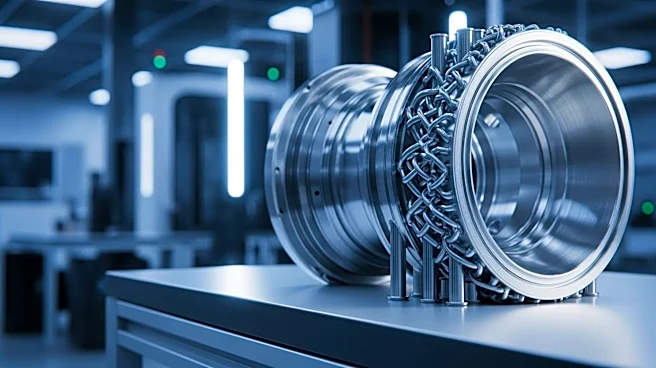
twelve months, energy OEMs are exploring AM as a way to regain control over their supply chains. Fastech Engineering, a contract manufacturer, is leveraging wire arc additive manufacturing (WAAM) and laser-wire directed energy deposition (LW-DED) to produce high-performance alloy components with reduced lead times and material waste.
Why It's Important?
The adoption of large-scale metal AM in the energy sector represents a significant shift in manufacturing practices, offering a solution to long-standing supply chain constraints. By enabling on-demand production of critical components, AM reduces reliance on complex supply chains and enhances operational flexibility. This approach not only addresses immediate supply chain challenges but also supports long-term sustainability goals by minimizing material waste and energy consumption. As the energy sector continues to evolve, the integration of AM technologies will play a crucial role in driving innovation and efficiency.
What's Next?
As more energy OEMs adopt AM technologies, the focus will shift towards scaling production capabilities and establishing robust qualification and certification processes. The development of comprehensive material datasets and inspection protocols will be essential to ensure the reliability and performance of AM-produced components. Additionally, the expansion of AM applications beyond new-build components to include repair and refurbishment will further enhance the technology's value proposition. As the industry continues to embrace AM, collaboration between manufacturers, suppliers, and regulatory bodies will be key to overcoming barriers and unlocking the full potential of this transformative technology.
Beyond the Headlines
The shift towards additive manufacturing in the energy sector highlights broader trends in industrial innovation and supply chain resilience. As companies seek to reduce their environmental impact and improve operational efficiency, AM offers a pathway to achieving these goals. The technology's ability to produce complex geometries and reduce material waste aligns with the industry's sustainability objectives, positioning AM as a critical enabler of the energy transition.