



What's Happening?
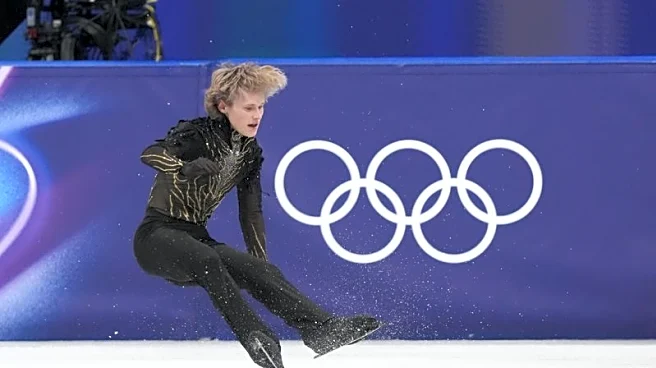
Ilia Malinin, known as the 'Quad God,' experienced a significant setback at the 2026 Winter Olympics in Milan. Despite entering the free skate final as a favorite, Malinin fell twice during his routine, resulting in a score of 156.33 and an eighth-place finish. This was a stark contrast to his previous performances, where he consistently scored above 200 points. Malinin revealed that he was overwhelmed by negative thoughts before his performance, which contributed to his unexpected collapse. The gold medal was ultimately claimed by Kazakhstan's Mikhail Shaidorov.
Why It's Important?
Malinin's performance highlights the intense pressure athletes face at the Olympic level, where mental resilience is as crucial as physical skill. His experience underscores the importance
of mental health support for athletes, as psychological factors can significantly impact performance. This incident may prompt sports organizations to invest more in mental health resources to help athletes manage stress and expectations. Additionally, Malinin's fall from grace serves as a reminder of the unpredictable nature of competitive sports, where even top contenders can falter.
What's Next?
Following this setback, Malinin may focus on rebuilding his confidence and addressing the mental challenges he faced. His future competitions will likely be closely watched to see how he recovers from this experience. The incident may also lead to broader discussions within the sports community about the role of mental health in athletic performance, potentially influencing training and support systems for athletes worldwide.