


What's Happening?
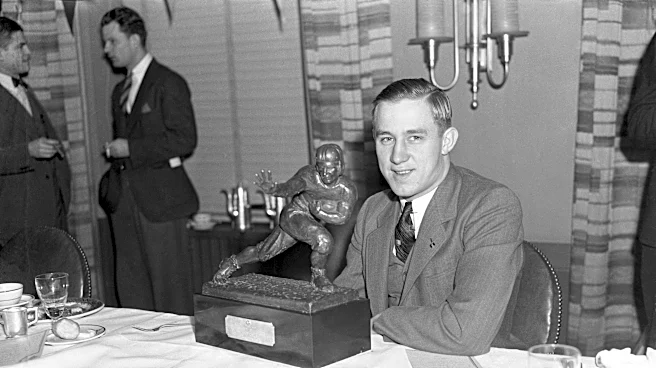
The Cleveland Browns, along with other NFL teams, are preparing for the upcoming 2026 NFL draft, a critical event for building team rosters. The NFL draft, which began in 1936, was designed to create competitive balance among teams by allowing the worst-performing
teams to select first. This system was proposed by Philadelphia Eagles owner Bert Bell to ensure that all teams had a fair chance to acquire top college talent. The draft has evolved over the years, starting with nine rounds and expanding to as many as 32 rounds before settling on the current seven-round format. The draft's origins trace back to a time when NFL teams were based in smaller cities and had no formal player selection process, leading to disparities in team strength.
Why It's Important?
The NFL draft is a cornerstone of team-building in professional football, impacting the competitive landscape of the league. By allowing weaker teams to select first, the draft aims to maintain parity, ensuring that all teams have the opportunity to improve and compete effectively. This system has been crucial in preventing a few dominant teams from monopolizing talent, which could lead to a decline in fan interest and revenue. The draft also influences economic activity in host cities, as it attracts fans and media attention, boosting local businesses. The evolution of the draft reflects broader trends in professional sports, where similar systems have been adopted to ensure fair competition.
What's Next?
As the 2026 NFL draft approaches, teams like the Cleveland Browns are strategizing to make the most of their picks. The draft will continue to be a pivotal event for teams to address roster needs and build for the future. The ongoing adjustments to the draft format and location reflect the league's efforts to enhance fan engagement and economic impact. Future drafts may see further innovations in how players are evaluated and selected, potentially incorporating advanced analytics and technology to improve decision-making processes.
Beyond the Headlines
The NFL draft's impact extends beyond the field, influencing cultural and economic aspects of sports. It has set a precedent for other professional leagues, highlighting the importance of equitable player distribution in maintaining competitive balance. The draft also underscores the role of sports in community identity and economic development, as cities vie to host the event and capitalize on its economic benefits. Additionally, the draft process raises ethical considerations regarding player evaluation and the pressures faced by young athletes entering professional sports.