






What's Happening?
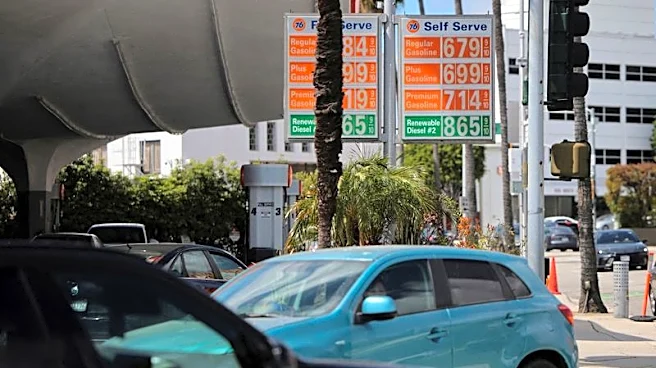
Matt Cortland and John Fleming, a couple based in London, have developed an AI-powered bot named Bobby to track gas prices across the United States. The project, called Gas Index, involves the bot making calls to nearly 20,000 gas stations to gather real-time
pricing data. This initiative aims to provide consumers with up-to-date information on gas prices, which are then compared to regional delicacies to offer a relatable context. For instance, in Massachusetts, the cost of filling a tank is compared to the price of Dunkin' iced coffees. The project utilizes various technologies, including Twilio for making calls and ElevenLabs for data management, and has been developed as a response to rising fuel costs amid geopolitical tensions. The couple's approach highlights the differences in fuel pricing regulations between the U.S. and the U.K., where prices are updated more frequently and publicly accessible.
Why It's Important?
The Gas Index project is significant as it addresses the challenge of obtaining accurate and timely gas price information in the U.S., where prices can vary widely by region. By providing a tool that translates gas prices into everyday terms, the project aims to make the impact of rising fuel costs more tangible for consumers. This could influence consumer behavior and potentially drive demand for more transparent pricing practices. Additionally, the use of AI and user-generated data highlights the growing trend of leveraging technology to solve real-world problems. The project also underscores the economic impact of geopolitical events, such as the war in Iran, on domestic fuel prices, which have seen significant increases. This initiative could serve as a model for other sectors looking to improve data accessibility and consumer engagement.
What's Next?
As the Gas Index continues to evolve, the developers plan to refine the accuracy of their data by incorporating more user-submitted information and improving their AI's ability to filter out inaccuracies. The project may also expand its coverage to include more gas stations and potentially other regions outside the U.S. Stakeholders, including consumers and independent gas station owners, may respond by engaging more with the platform to ensure their pricing is accurately represented. Additionally, the project could prompt discussions among policymakers about the need for more standardized and transparent fuel pricing regulations in the U.S., similar to those in the U.K.
Beyond the Headlines
The Gas Index project raises broader questions about the role of technology in consumer advocacy and the potential for AI to democratize access to information. By making gas prices more relatable through regional comparisons, the project challenges traditional ways of presenting economic data. It also highlights the cultural significance of regional delicacies as a means of contextualizing economic changes. Furthermore, the initiative may influence how other industries approach data transparency and consumer engagement, potentially leading to a shift in how businesses communicate with their customers.