



What's Happening?
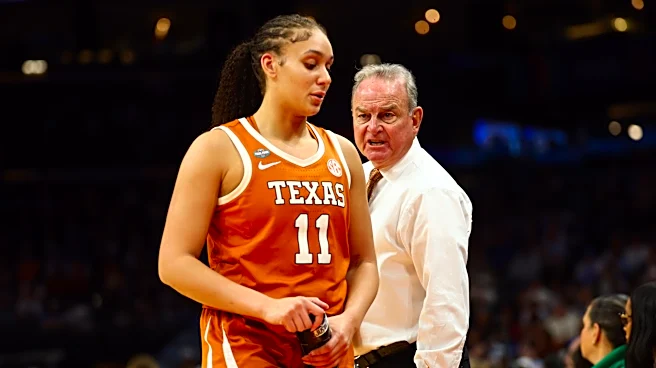
Women's sports in the United States are experiencing unprecedented growth, with significant increases in viewership and investment. The Women's National Basketball Association (WNBA) and the National Women's Soccer League (NWSL) are leading this surge,
with the potential to generate $2.5 billion in value for rights holders by 2030. Media brands like ESPN and E.W. Scripps are expanding their coverage of women's sports, while private equity investors and brand sponsors are increasingly recognizing the financial opportunities. Michele Kang, a notable investor, has implemented a global multi-club ownership model to support women's soccer teams, further driving investment in the sector. Despite these advancements, pay equity remains a challenge, with disparities in salaries between male and female athletes still prevalent.
Why It's Important?
The growth of women's sports represents a significant shift in the sports industry, offering new opportunities for investment and revenue generation. As viewership and media coverage increase, women's sports are becoming more mainstream, attracting larger audiences and sponsors. This trend not only benefits athletes through improved pay and conditions but also offers financial returns for investors and media companies. However, achieving pay equity remains a critical issue, as many female athletes still face lower salaries compared to their male counterparts. Addressing these disparities is essential for sustaining the momentum and ensuring that the growth of women's sports translates into tangible benefits for all stakeholders.
What's Next?
The continued expansion of women's sports will likely lead to further investment and media coverage, with potential for new sponsorship deals and broadcasting agreements. Stakeholders in the sports industry, including investors, media companies, and sponsors, are expected to capitalize on the growing popularity of women's sports. Efforts to address pay equity will be crucial, with potential policy changes and collective bargaining agreements aimed at improving compensation for female athletes. As the industry evolves, maintaining the momentum and ensuring equitable growth will be key challenges for all involved.