



What's Happening?
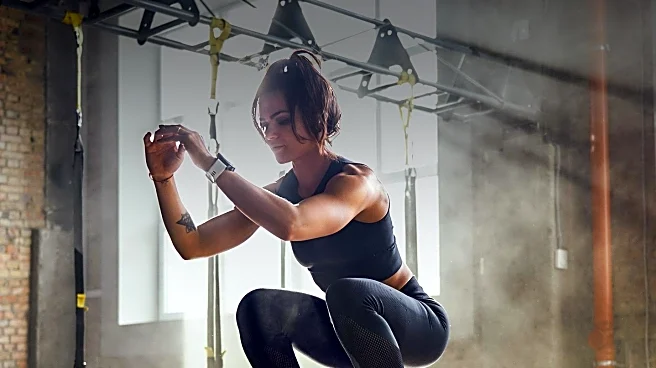
Nutritionist Nmami Agarwal emphasizes the importance of strength training for women, highlighting its numerous health benefits. According to Agarwal, strength training, which involves exercises that force muscles to work against resistance, can significantly
enhance muscle, ligament, and bone density. It also improves metabolism, joint health, and reduces the risk of injury. Agarwal challenges the traditional notion that women should aim to be leaner and smaller, advocating instead for building muscle as a powerful health upgrade. She notes that muscles play a crucial role in boosting metabolism, improving insulin sensitivity, and supporting hormonal balance, all of which are vital for women's health as they age.
Why It's Important?
The emphasis on strength training for women marks a shift in fitness paradigms, encouraging women to focus on building strength rather than merely achieving a lean physique. This approach not only promotes physical health but also supports mental well-being by fostering confidence and resilience. As women age, maintaining muscle mass becomes increasingly important for metabolic health and bone density, potentially reducing the risk of osteoporosis and other age-related health issues. By advocating for strength training, Agarwal is contributing to a broader movement that empowers women to take control of their health through informed fitness choices.
What's Next?
As more women embrace strength training, fitness industries may see a rise in demand for resources and programs tailored to women's strength-building needs. This could lead to the development of more inclusive fitness environments and the creation of specialized training programs. Additionally, healthcare providers might increasingly recommend strength training as part of a comprehensive approach to women's health, potentially influencing public health policies and guidelines. The growing awareness of the benefits of strength training could also inspire further research into its long-term health impacts, particularly for women.
Beyond the Headlines
The advocacy for strength training among women also touches on cultural and societal norms regarding female body image. By promoting strength and muscle building, there is a challenge to the traditional beauty standards that prioritize thinness over health. This shift could lead to broader acceptance of diverse body types and a redefinition of what it means to be fit and healthy. Furthermore, as women become more involved in strength training, there may be increased opportunities for female representation and leadership in the fitness industry, contributing to gender equality in this field.