









What's Happening?
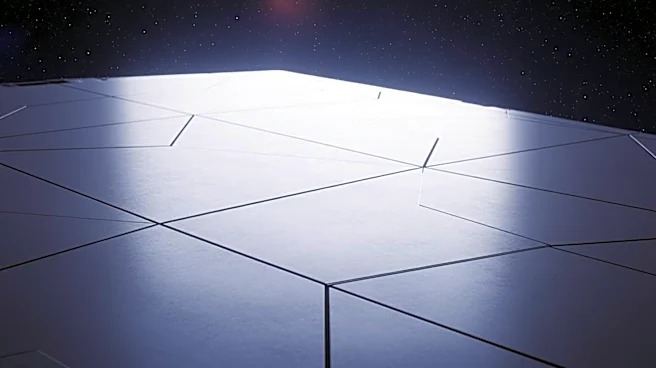
The global market for reusable surface insulation tiles is projected to experience significant growth from 2026 to 2035, driven by increased commercial and defense space launch activities. According to a report by IndexBox, the market is expected to grow at a compound
annual growth rate (CAGR) of 10.2% during this period. The demand is primarily fueled by the aerospace and defense sectors, which account for 65-70% of the global demand, particularly for hypersonic glide vehicles, crew capsules, and reusable first-stage boosters. The remaining demand comes from industrial high-temperature processing and research facilities. The market is also seeing advancements in next-generation ceramic matrix composite (CMC) and hybrid tiles, which offer higher temperature thresholds and are expanding applications beyond reentry into sustained hypersonic cruise and industrial processes.
Why It's Important?
The growth of the reusable surface insulation tiles market is significant for the aerospace and defense industries, as it supports the development of reusable launch vehicles and hypersonic platforms. This expansion is crucial for reducing costs and increasing the frequency of space missions, which can enhance national security and commercial opportunities. The advancements in tile technology, such as CMC and hybrid tiles, are expected to improve the efficiency and safety of high-temperature processes, benefiting industries like semiconductor manufacturing and precision engineering. The market's growth also indicates a robust investment in space technology by companies like SpaceX and Blue Origin, as well as national space agencies, which could lead to further innovations and economic benefits.
What's Next?
The market is expected to continue its growth trajectory, with annual orbital launches projected to increase significantly by 2035. This will likely drive further demand for reusable thermal protection systems. Companies involved in the production of these tiles may focus on improving manufacturing processes, such as additive manufacturing, to reduce costs and lead times. Additionally, the development of new tile compositions will be crucial, although it may face challenges due to extended qualification cycles and raw material supply constraints. The market may also see new entrants from the additive manufacturing and advanced ceramics sectors, potentially capturing niche segments by 2030.