
What's Happening?
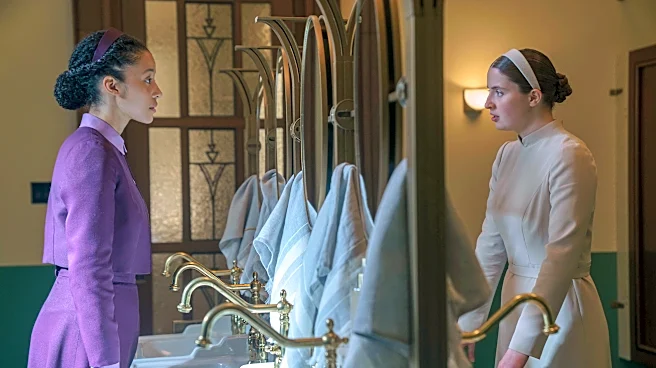
Margaret Atwood's dystopian narrative continues to resonate with audiences as her novel 'The Testaments' is adapted for television. This sequel to 'The Handmaid's Tale' explores a future America transformed
into a patriarchal theocracy. The adaptation arrives at a time when themes of authoritarianism and women's rights are increasingly relevant, echoing real-world events such as the Epstein scandal and the separation of families at the US-Mexican border. The adaptation is part of a broader cultural reflection on dystopian fiction, which serves as both a warning and a call to action against complacency and bigotry.
Why It's Important?
The adaptation of 'The Testaments' underscores the enduring relevance of dystopian fiction in highlighting societal issues. Atwood's work, particularly in the context of President Trump's administration, has been seen as prophetic, capturing the anxieties surrounding authoritarianism and the rollback of women's rights. The narrative's focus on resistance and humanity over brutality offers a powerful commentary on the current political climate. It challenges viewers to confront uncomfortable truths and consider the implications of unchecked power and societal complacency.