
What's Happening?
The Trump administration is reportedly close to finalizing a $500 million bailout deal for Spirit Airlines, a low-cost carrier facing significant financial difficulties. According to the Wall Street Journal, the U.S. government plans to lend Spirit the funds
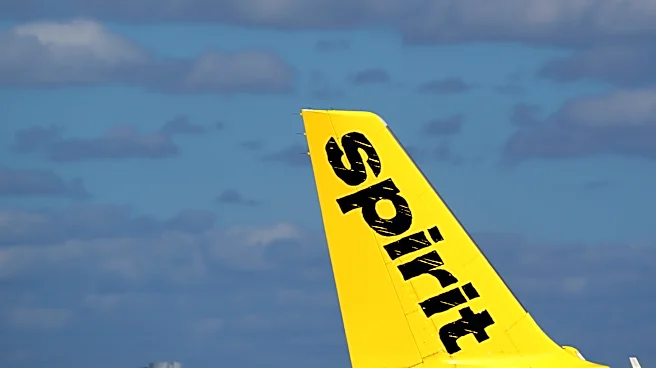
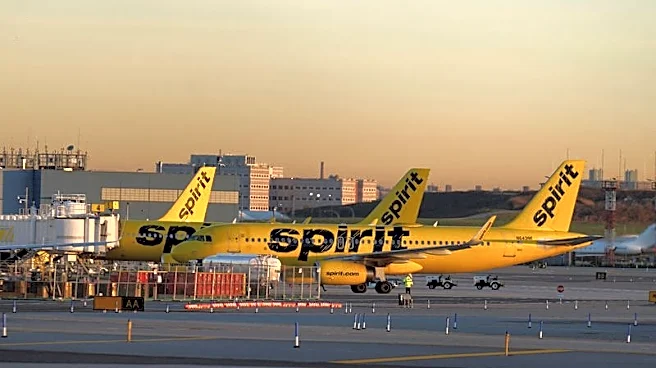
in exchange for warrants that could potentially give it a stake in the airline. This move comes as Spirit grapples with the aftermath of two recent bankruptcy filings and plans to reduce its fleet to about one-third of its pre-bankruptcy size by the third quarter of 2026. The airline, known for its budget-friendly fares and bright yellow all-Airbus fleet, has been impacted by surging jet fuel prices, which have doubled from the levels assumed in its financial projections. President Trump has expressed interest in a potential acquisition of Spirit and has not ruled out federal involvement, marking another instance of the administration's intervention in private companies.
Why It's Important?
The potential bailout of Spirit Airlines by the Trump administration highlights the ongoing challenges faced by the U.S. aviation industry, particularly low-cost carriers. The deal could provide Spirit with much-needed financial stability, allowing it to continue operations and potentially avoid further bankruptcy proceedings. However, the intervention has sparked criticism from some politicians and industry leaders who argue against government involvement in private enterprises. The situation also underscores the broader economic impact of rising jet fuel prices, which have been exacerbated by geopolitical tensions affecting global oil supply. The outcome of this bailout could set a precedent for future government actions in the airline industry, influencing public policy and economic strategies.
What's Next?
If the bailout deal is finalized, Spirit Airlines will likely focus on restructuring its operations to align with its reduced fleet size and financial capabilities. The airline may also explore strategic partnerships or acquisitions to strengthen its market position. Meanwhile, the Trump administration will continue to monitor the situation, with potential implications for other struggling airlines. Industry stakeholders, including competitors and regulatory bodies, will be closely watching the developments, as the deal could influence future government interventions in the sector. Additionally, the impact of fluctuating fuel prices on the airline's turnaround plan will remain a critical factor in its financial recovery.