





What's Happening?
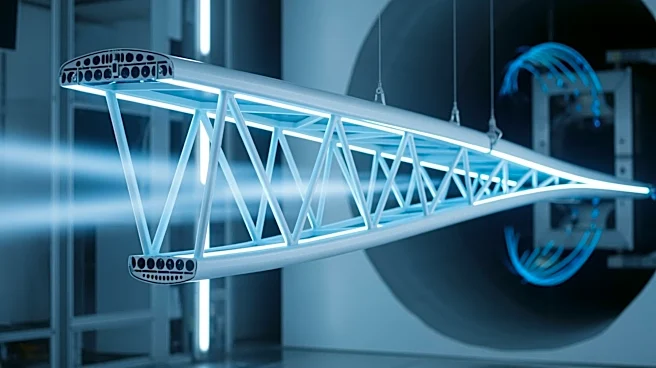
NASA and Boeing have successfully completed wind tunnel testing on an innovative aircraft design known as the truss-braced wing concept. This design features a long, thin wing supported by aerodynamically shaped structures, aimed at enhancing aerodynamic efficiency
and reducing fuel consumption for future airliners. The testing, conducted in a large wind tunnel operated by QinetiQ in Farnborough, England, involved a semispan model to simulate the forces and airflow around the wing during takeoff and landing conditions. This collaboration is part of Boeing's Subsonic Ultra Green Aircraft Research (SUGAR) concept, which seeks to revolutionize aircraft design. The tests have provided valuable data, contributing to a comprehensive understanding of this advanced airframe concept.
Why It's Important?
The successful testing of the truss-braced wing concept marks a significant step forward in the development of more fuel-efficient aircraft. As the aviation industry faces increasing pressure to reduce its environmental impact, innovations like this could lead to substantial reductions in fuel use and operational costs. This collaboration between NASA and Boeing highlights the potential for public-private partnerships to drive technological advancements with commercial applications. The research supports the broader goal of creating sustainable aviation solutions, which is crucial for meeting future environmental regulations and consumer demand for greener travel options.
What's Next?
Following the completion of these wind tunnel tests, NASA and Boeing will continue to analyze the data to refine the truss-braced wing design. Future steps may include further testing and development to address any challenges identified during the initial tests. The ongoing collaboration aims to transition this concept from experimental stages to practical application in commercial aircraft. As the research progresses, it could influence future aircraft designs and manufacturing processes, potentially leading to the adoption of this technology by major airlines seeking to improve efficiency and reduce emissions.