








What's Happening?
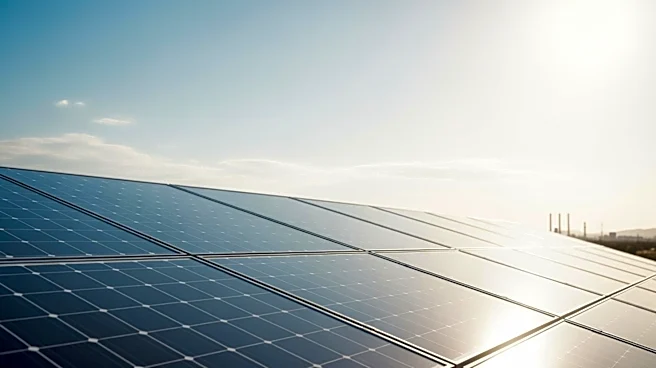
The U.S. Department of Energy has announced new solar module assembly projects and factory developments as part of domestic clean energy manufacturing incentives. This move is part of a broader effort to reduce reliance on China, which currently dominates
the global solar supply chain, particularly in photovoltaic wafers. The International Energy Agency (IEA) reports that China holds 95% of global PV wafer capacity, creating a potential chokepoint in the supply chain. The U.S. and Europe are working to increase their manufacturing capacities to ensure a secure and resilient clean energy transition.
Why It's Important?
The dominance of China in the solar supply chain poses a significant risk to the global clean energy transition. Any disruptions in trade or logistics could impact solar projects worldwide. By investing in domestic manufacturing, the U.S. aims to mitigate these risks and enhance energy security. This shift is crucial as solar panels become strategic assets in the 21st century, similar to oil and gas in the past. The development of a robust domestic solar industry could lead to economic growth, job creation, and a more sustainable energy future.
What's Next?
The U.S. and Europe will continue to invest in expanding their solar manufacturing capabilities. This includes building new factories and developing the necessary infrastructure to support a competitive solar industry. Policymakers will need to address potential trade disputes and ensure that the clean energy transition remains secure and competitive. The success of these efforts will depend on the ability to create a resilient supply chain that can withstand geopolitical and economic pressures.