





What's Happening?
Hermès International, a leading French luxury brand, reported a decline in its first-quarter revenue growth, attributed to geopolitical tensions in the Middle East and a decrease in tourism. The company's shares fell by 8.2% after revealing that its revenue growth was
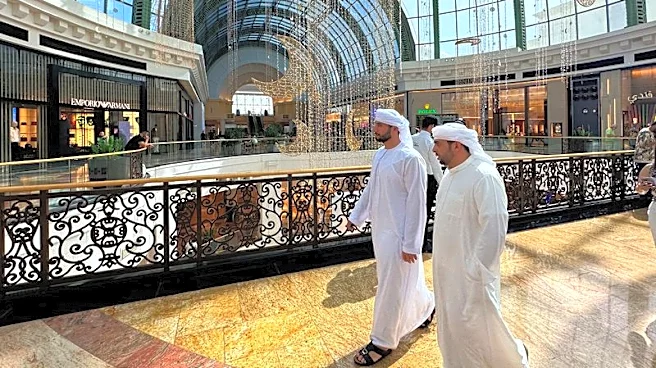
slightly below expectations. Despite a 6% increase in sales at constant exchange rates, the reported figures showed a 1% decline due to a negative currency impact. The Middle East conflict has significantly affected Hermès' sales, particularly in March, leading to a 5.9% decrease in the region. The company operates six stores in the Middle East, and the geopolitical situation has also impacted its travel retail locations and overall tourism, especially in Paris.
Why It's Important?
The challenges faced by Hermès highlight the broader impact of geopolitical tensions on the luxury goods market. The decline in tourism, particularly from the Middle East, affects not only Hermès but also other luxury brands that rely on international tourists. This situation underscores the vulnerability of the luxury sector to global political and economic disruptions. The company's reliance on leather goods and its strategy to increase production capacity are crucial for maintaining its market position. The U.S. market remains a strong performer for Hermès, providing some stability amid the volatility in other regions.
What's Next?
Hermès is focusing on stabilizing its operations in the Middle East as the situation begins to improve. The company plans to continue expanding its production capacity and exploring new product models to diversify its offerings. The luxury brand is also investing in physical retail expansion, with several store projects in the pipeline, including new openings in the U.S. and Europe. Hermès remains confident in its long-term strategy, despite the current geopolitical and economic uncertainties.