







What's Happening?
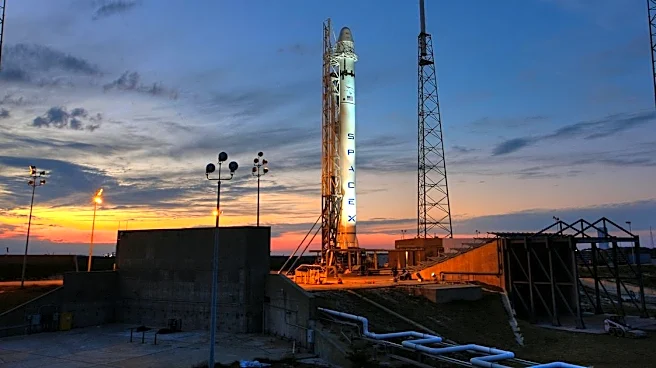
SpaceX successfully launched 24 Starlink satellites into low Earth orbit on May 19, 2026, from Vandenberg Space Force Base in California. The launch was conducted using a Falcon 9 rocket, marking SpaceX's 58th mission of the year and its 651st successful launch since
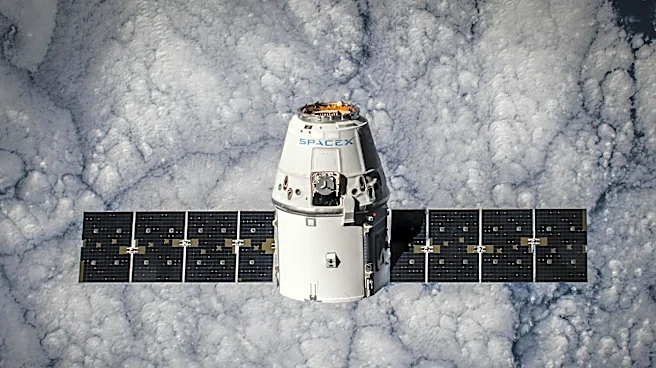
2010. The satellites are part of SpaceX's ongoing effort to expand its Starlink internet service, which aims to provide high-speed internet access globally. The Falcon 9 rocket's booster, identified as B1103, completed its first reuse by landing on the droneship 'Of Course I Still Love You' in the Pacific Ocean. This launch brings the total number of operational Starlink satellites to nearly 10,500, according to space tracker Jonathan McDowell.
Why It's Important?
The expansion of the Starlink satellite network is significant for global internet connectivity, particularly in remote and underserved areas. By increasing the number of satellites, SpaceX enhances its ability to provide reliable and high-speed internet access worldwide. This development is crucial for bridging the digital divide and supporting economic growth in regions lacking traditional internet infrastructure. Additionally, the successful reuse of the Falcon 9 booster demonstrates SpaceX's commitment to reducing launch costs through reusable technology, which could have long-term implications for the commercial space industry.
What's Next?
SpaceX is expected to continue its aggressive launch schedule, further expanding the Starlink constellation. The company aims to increase the number of satellites in orbit to improve service quality and coverage. As the network grows, SpaceX may face regulatory challenges and competition from other satellite internet providers. The company will also need to address concerns about space debris and the environmental impact of its satellite launches. Stakeholders, including governments and international organizations, will likely monitor these developments closely.