






What's Happening?
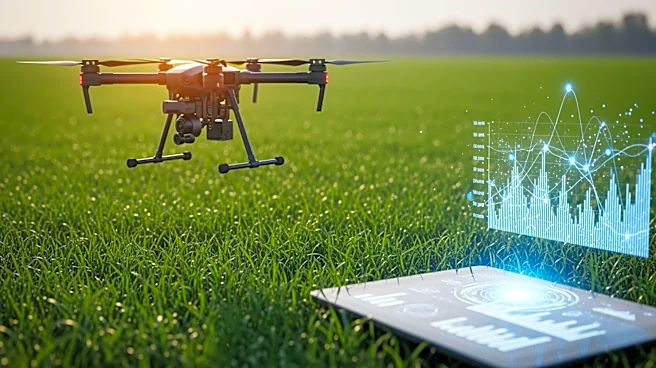
The agricultural lending sector is experiencing a transformation through the integration of artificial intelligence (AI) technologies. According to Cameron Burford, Managing Director of SaaS at Growers Edge, AI is being utilized to identify loan opportunities
based on crop patterns, streamline compliance workflows, and address borrower needs following weather events. Successful AI pilots in this sector focus on automating back-end workflows, allowing loan officers to spend more time with customers. These pilots operate on a 90-day decision cycle, which is crucial for gaining buy-in for AI projects. The use of AI in agricultural lending aims to enhance customer trust by supporting loan officers with real-time data during farm visits, thereby improving customer interactions.
Why It's Important?
The integration of AI in agricultural lending is significant as it promises to enhance efficiency and customer engagement in the sector. By automating routine tasks, loan officers can focus on building relationships with clients, which is essential in maintaining trust. This technological shift could lead to more informed decision-making and personalized customer service, potentially increasing customer satisfaction and loyalty. Furthermore, the 90-day AI cycle allows for rapid testing and adaptation, enabling lenders to stay competitive in a fast-evolving technological landscape. As AI becomes more prevalent, lenders who adopt these technologies early may gain a competitive edge, while those who delay may struggle to keep up.
What's Next?
As AI continues to be integrated into agricultural lending, lenders will need to focus on securing buy-in from stakeholders and ensuring that AI deployments are aligned with regulatory requirements. The next steps involve developing frameworks to manage economic models, budget risks, and strategic focuses. Lenders will also need to prioritize explainable decision logic and audit trails to meet regulatory standards. As the technology evolves, lenders will likely explore more domain-specific applications that leverage their unique expertise and data. This ongoing experimentation and learning will be crucial for lenders to maintain their competitive advantage and adapt to the changing technological landscape.
Beyond the Headlines
The adoption of AI in agricultural lending raises important considerations regarding data privacy and the ethical use of technology. As lenders collect and analyze more data, they must ensure that customer information is protected and used responsibly. Additionally, the shift towards AI-driven processes may require a cultural change within organizations, as employees adapt to new technologies and workflows. The long-term success of AI in this sector will depend on balancing technological advancements with human judgment and maintaining the trust that is foundational to the lender-customer relationship.