



What's Happening?
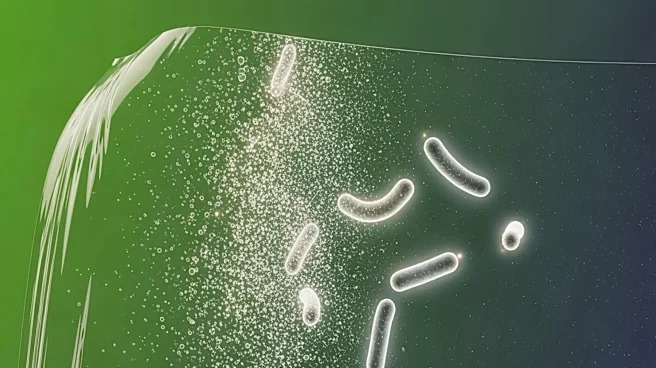
Researchers have developed a new type of plastic that can self-destruct on command, potentially reducing plastic pollution. The innovation involves embedding engineered microbial consortia into plastics, allowing them to break down into their base components
when activated. The team, led by Dai and colleagues, used Bacillus subtilis engineered to produce two polymer-degrading enzymes. These enzymes work together to efficiently degrade the plastic without creating microplastic particles. The process is initiated by adding a nutrient broth at 122 degrees Fahrenheit, which activates the spores and leads to complete degradation within six days. This development could transform the durability of plastics from a problem into a programmable feature, offering a novel solution to the global issue of plastic waste.
Why It's Important?
The development of self-destructing plastics represents a significant advancement in addressing the global plastic pollution crisis. Traditional plastics contribute to environmental degradation due to their long decomposition times and the creation of microplastics. By enabling plastics to break down efficiently and completely, this technology could reduce the environmental impact of plastic waste. It also aligns with global efforts to promote sustainability and circular economy practices. Industries that rely heavily on plastics, such as packaging and manufacturing, could benefit from adopting this technology, potentially reducing their environmental footprint and meeting increasing regulatory demands for sustainable practices.
What's Next?
The next steps for this technology involve scaling up production and testing its application in various industries. Researchers will need to ensure that the engineered plastics can be produced cost-effectively and meet industry standards for strength and durability. Regulatory approval will also be necessary to ensure the safety and environmental impact of the new materials. If successful, this innovation could lead to widespread adoption in industries seeking sustainable alternatives to traditional plastics. Additionally, further research may explore the use of similar microbial consortia in other materials, expanding the potential applications of this technology.