







What's Happening?
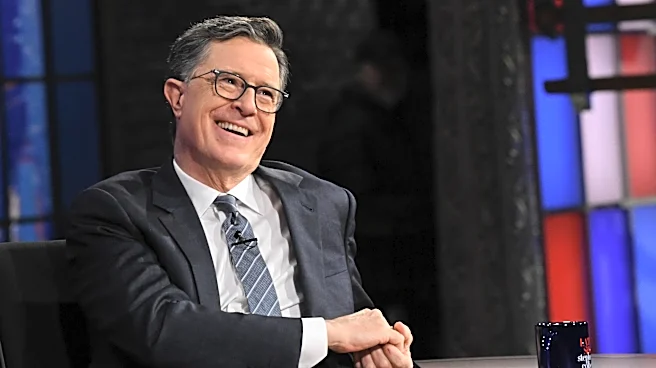
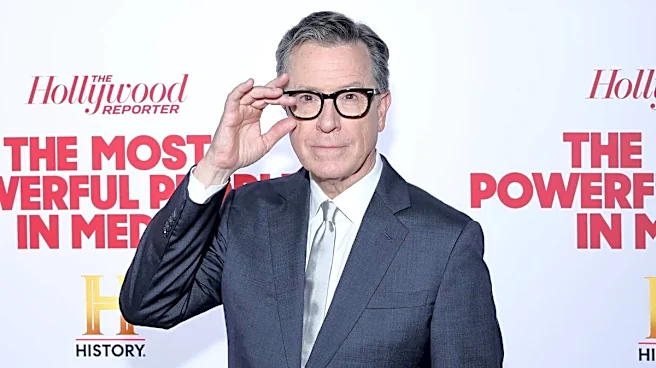
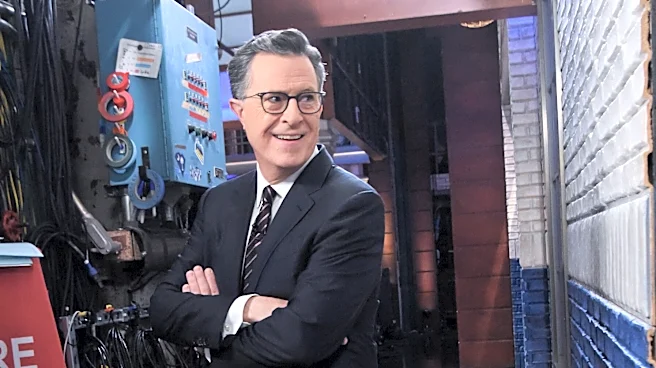
Stephen Colbert is set to leave 'The Late Show' after a successful tenure that began in 2015 when he succeeded David Letterman. Known for his unique interviewing style, Colbert has been praised for his ability to blend humor with deep, thoughtful conversations,
often drawing out emotional and sincere responses from his guests. His departure is seen as a significant shift in the late-night television landscape, where substantive interviews are becoming increasingly rare. The decision to end Colbert's show has been attributed to financial reasons by CBS, though some speculate political motivations, particularly given President Trump's public comments about Colbert's exit.
Why It's Important?
Colbert's exit marks a potential decline in the quality of celebrity interviews on late-night television. His approach, which valued meaningful conversation over superficial entertainment, set a standard that is now at risk of being lost. This shift could lead to a more sycophantic celebrity culture, where interviews are less about genuine dialogue and more about promoting content without scrutiny. The change reflects broader trends in media consumption, where short clips and soundbites dominate, potentially impacting how public figures are perceived and how cultural narratives are shaped.
What's Next?
With Colbert's departure, the landscape of late-night television may continue to evolve towards more entertainment-focused content, with less emphasis on in-depth interviews. Other hosts may follow the trend of prioritizing viral moments over substantive discussions. This could influence the types of guests and topics featured on these shows, as well as the overall tone of late-night programming. The industry may also see a rise in alternative platforms, such as podcasts, where celebrities can control the narrative more tightly.
Beyond the Headlines
The shift away from in-depth interviews could have long-term cultural implications, affecting how audiences engage with media and perceive public figures. As traditional media outlets adapt to changing consumption habits, the role of journalism in holding public figures accountable may diminish, leading to a less informed public. This trend could also impact the types of stories that gain traction, with a focus on entertainment over critical analysis.