
What's Happening?
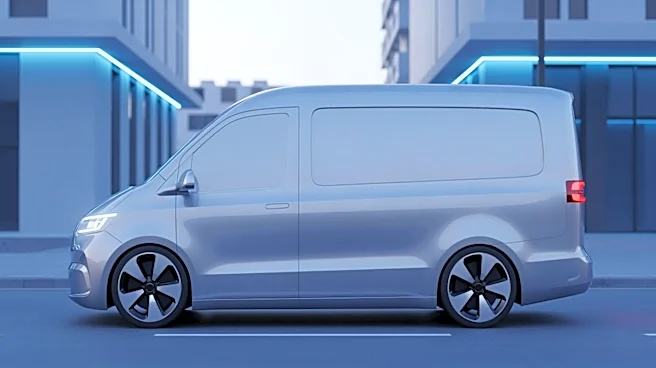
Kia has launched the PV5 electric van in Japan, marking its return to the Japanese market with a focus on commercial electric vehicles (EVs). The launch includes the PV5 Passenger and Cargo variants, with Kia PBV
Tokyo West set to open as the brand's first directly-operated dealership in Japan. Kia has partnered with Sojitz Corporation, a major Japanese trading company, to handle local distribution and after-sales services. The PV5 is designed specifically for the Japanese market, featuring a compact size suitable for narrow roads and equipped with CHAdeMO, Japan's rapid-charging standard. Kia aims to sell around 1,000 electric vans by the end of fiscal 2026, targeting a niche in the relatively uncontested commercial EV market.
Why It's Important?
Kia's strategic entry into the Japanese market through the commercial EV segment highlights the growing demand for sustainable transportation solutions. By focusing on commercial vehicles, Kia aims to circumvent the highly competitive passenger car market dominated by domestic brands like Toyota, Honda, and Nissan. The Japanese government's target of 30% electric vehicle penetration by 2030 presents a significant opportunity for Kia to establish a foothold in the market. The inclusion of vehicle-to-home functionality in the PV5 could appeal to Japanese consumers, given the country's history of natural disasters. Kia's approach may also influence other international automakers to explore similar niche strategies in Japan.
What's Next?
Kia's success in the Japanese market will depend on its ability to navigate the local regulatory environment and secure favorable positions within the government's EV subsidy framework. The partnership with Sojitz Corporation is expected to enhance Kia's service network, potentially qualifying the PV5 for logistics-specific subsidies. However, the opacity of Japan's subsidy scoring system poses challenges for non-domestic entrants. Kia's strategy will likely involve expanding its dealership and service center network to meet the criteria for subsidies and increase its market presence. The outcome of Kia's efforts could set a precedent for other foreign automakers seeking to enter the Japanese EV market.