


What's Happening?
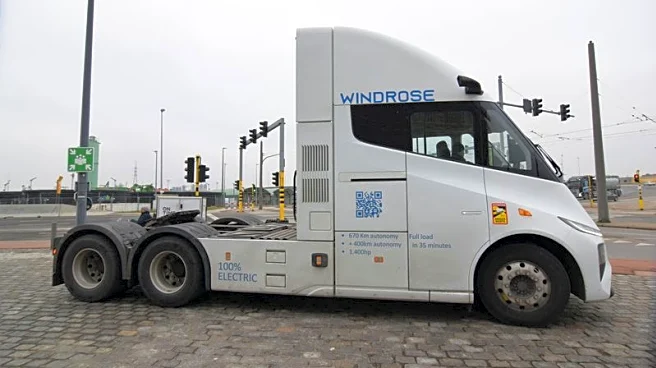
Tesla has inaugurated its first Megacharger station for Semi customers in Ontario, California. This development is a significant step in Tesla's efforts to establish a robust charging network for electric trucks. The Ontario location is strategically
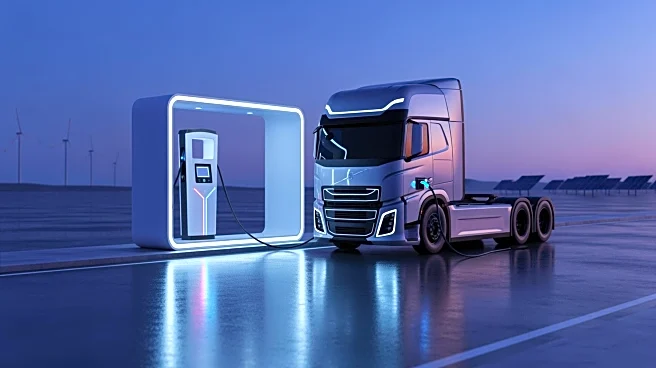
positioned in the Inland Empire, a major freight corridor, facilitating electric truck operations between the Ports of Los Angeles and Long Beach and inland distribution centers. The Megacharger can deliver up to 1.2 MW of power, allowing for a 60% charge in about 30 minutes, although the current public station is limited to 750 kW. This station is part of Tesla's broader plan to deploy 66 Megacharger locations across the U.S., with a focus on major freight routes. Tesla's partnership with Pilot, a major truck stop operator, will further expand this network, with the first Pilot sites expected to open by summer 2026.
Why It's Important?
The opening of the Megacharger station is crucial for the adoption of electric trucks, providing the necessary infrastructure to support long-haul electric trucking. This development positions Tesla as a leader in the electric truck market, offering a first-mover advantage over competitors who are still in the planning stages of similar infrastructure. The ability to charge quickly during mandatory rest breaks makes electric trucking more viable, potentially accelerating the shift from diesel to electric in the freight industry. This could lead to significant environmental benefits and operational cost savings for fleet operators, influencing the broader transportation and logistics sectors.
What's Next?
Tesla plans to continue its rapid expansion of the Megacharger network, with 37 sites expected to be operational by 2026. The partnership with Pilot will play a key role in this expansion, providing strategic locations along major freight corridors. The success of this rollout will depend on overcoming challenges such as permitting and utility interconnections. As Tesla progresses, other truck manufacturers and infrastructure providers may accelerate their own plans, potentially leading to increased competition and innovation in the electric truck market.