

What's Happening?
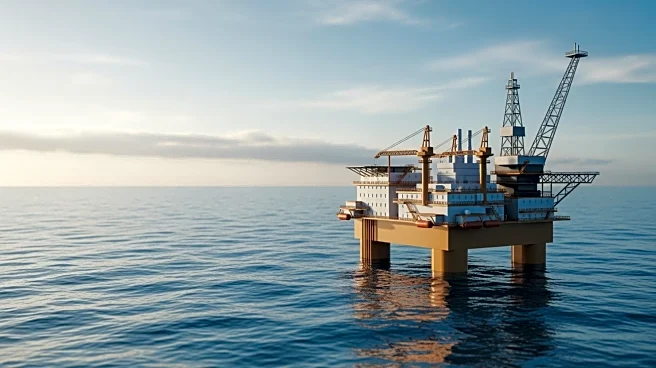
Equinor and Hydromea have successfully demonstrated a groundbreaking technology that enables real-time wireless data transmission from the seabed to cloud infrastructure. This achievement marks a significant advancement in subsea digital connectivity
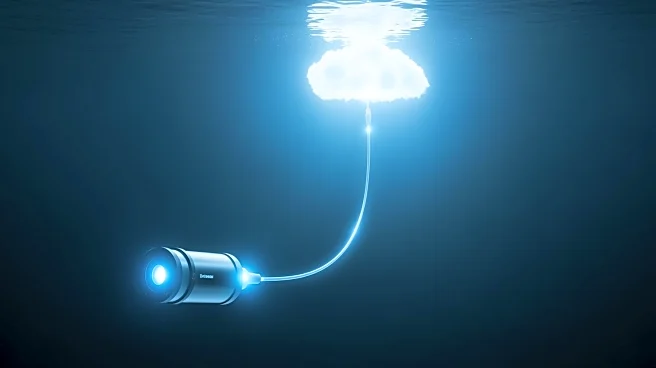
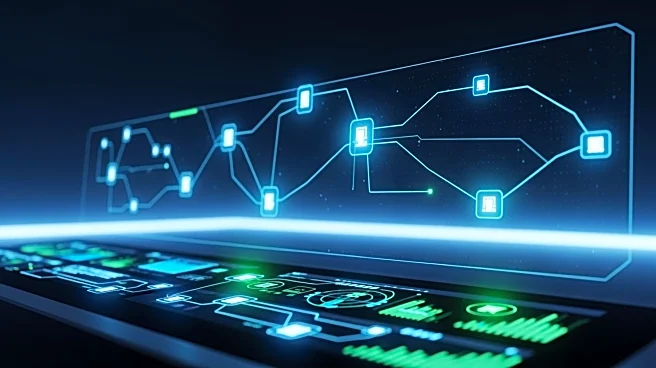
and offshore asset monitoring. Utilizing Hydromea's LUMA free-space optical communication devices, the technology allows high-volume data collected on the ocean floor to be transmitted through a wireless network into Equinor's cloud-based DEEPNET infrastructure. This innovation eliminates the need for traditional umbilicals or cabled systems, facilitating real-time data transmission from subsea sensors and autonomous vehicles.
Why It's Important?
This technological breakthrough has the potential to revolutionize offshore energy operations by enhancing asset integrity monitoring and reducing reliance on vessels for data retrieval. The ability to stream subsea data directly to cloud-based systems can lead to more efficient and cost-effective monitoring of offshore infrastructure. It also supports the development of autonomous subsea operations, paving the way for a more interoperable subsea ecosystem. This advancement could significantly impact the offshore energy industry by improving operational efficiency and reducing environmental impact.
What's Next?
Equinor and Hydromea's successful demonstration is expected to accelerate the adoption of wireless subsea networks in the offshore energy sector. The companies plan to continue developing standardized docking and communication infrastructure for subsea drones and intervention vehicles. This initiative aims to create a more integrated and efficient subsea ecosystem, potentially leading to broader industry adoption of autonomous subsea operations. As the technology matures, it may also open new opportunities for innovation in other sectors reliant on subsea data transmission.